









What's Happening?
Fashion manufacturers, particularly in South and Southeast Asia, are facing significant challenges due to extreme heat, which is impacting their workforce and production capabilities. According to a report by New York University’s Stern Business School,
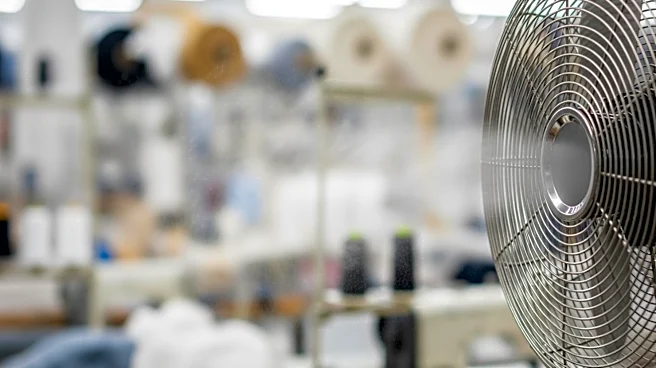
heat stress is emerging as a major threat to the fashion industry, disrupting production and affecting worker health. In India, for instance, temperatures have soared above 104°F, leading to health issues such as fainting spells and other heat-related illnesses among factory workers. In response, some manufacturers are taking proactive steps to mitigate these effects by redesigning factory layouts and investing in cooling technologies. These efforts include orienting buildings to minimize direct sunlight exposure, using high-performance insulation, and incorporating natural shading to create cooler microclimates around factory sites.
Why It's Important?
The rising temperatures pose a significant threat to the fashion industry's supply chain, particularly in regions where garment production is concentrated. The health and productivity of workers are at risk, which could lead to increased absenteeism and reduced product quality. This situation underscores the need for the industry to adapt to climate change by investing in infrastructure that can withstand extreme heat. The proactive measures taken by some manufacturers not only aim to protect workers but also ensure the continuity of production, which is crucial for meeting global demand. The industry's response to this challenge could set a precedent for other sectors facing similar climate-related issues.
What's Next?
As heat waves become more frequent, the fashion industry may need to adopt more comprehensive strategies to address heat stress. This could involve industry-wide collaboration to establish standards for heat-risk data collection and reporting, as well as policies for extreme heat adaptation. Manufacturers might also seek greater support from brands and industry stakeholders to finance necessary upgrades. The success of these initiatives could depend on the willingness of the entire supply chain to prioritize worker safety and sustainability over short-term cost savings.
Beyond the Headlines
The efforts to combat heat stress in the fashion industry highlight a broader tension between climate mitigation and adaptation. While reducing greenhouse gas emissions remains a priority, adapting to the immediate impacts of climate change is becoming increasingly urgent. The industry's response could influence how other sectors approach climate adaptation, potentially leading to innovations in building design and workforce management that prioritize environmental resilience.