






What's Happening?
India has been designated as the 2027 Destination of the Year by the American travel magazine Travel + Leisure. This recognition follows Brazil in 2026, Thailand in 2025, and Costa Rica in 2024. The magazine's editor-in-chief, Jacqui Gifford, cited India's
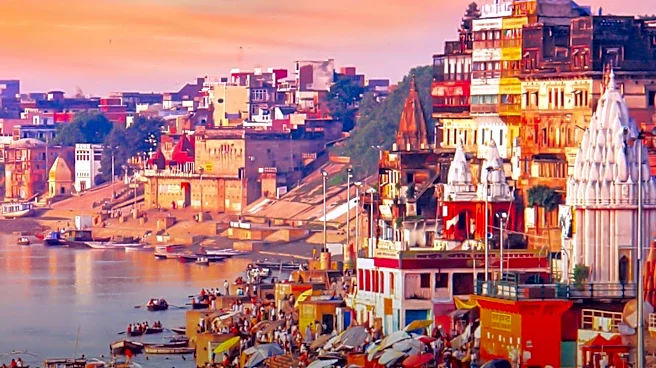
economic growth, diverse offerings, and high standards of hospitality as reasons for the selection. The special feature highlights various aspects of Indian tourism, including luxury travel, wellness vacations, historic palaces converted into hotels, secluded mountain resorts, Ayurvedic treatments, and culinary journeys. Despite this prestigious award, India is currently experiencing a decline in international tourism. According to the Indian Ministry of Tourism, the country recorded approximately 9.15 million foreign tourist arrivals in 2025, marking an 8% decrease from the previous year. The magazine's feature aims to showcase India's vast and varied attractions beyond well-known sites like the Taj Mahal, exploring regions from the Himalayas to tropical islands, and offering experiences such as tiger safaris and visits to ancient temples.
Why It's Important?
This designation by a prominent American travel publication could significantly influence future travel trends and perceptions among U.S. tourists. The recognition as 'Destination of the Year' often leads to increased interest and bookings, potentially counteracting the recent decline in foreign tourist arrivals to India. For the U.S. travel industry, this highlights a growing focus on diverse and experiential travel destinations, moving beyond traditional European or Caribbean locales. American tour operators and travel agencies may see increased demand for specialized India-focused itineraries, including luxury, wellness, and adventure tourism. The emphasis on India's economic growth and hospitality standards also signals a maturing tourism infrastructure capable of accommodating a wider range of international visitors. This could also impact investment decisions within the global tourism sector, potentially drawing more U.S. capital into India's hospitality and travel infrastructure development, as businesses seek to capitalize on the anticipated surge in interest.
What's Next?
Following this announcement, it is anticipated that there will be a concerted effort by India's tourism sector to leverage this recognition. Marketing campaigns targeting the U.S. market are likely to intensify, promoting the diverse experiences highlighted by Travel + Leisure. Indian tourism authorities may collaborate with American travel agencies and airlines to create attractive packages and improve connectivity. The focus on luxury and wellness tourism could lead to further development in these niche sectors, with new resorts and services emerging to cater to high-end travelers. Additionally, the Indian government might implement policies to address the recent decline in tourist arrivals, potentially through visa facilitation or promotional incentives. The increased visibility could also spur infrastructure improvements in less-visited regions, as highlighted in the magazine's feature, to accommodate a potential influx of tourists seeking unique experiences beyond the traditional circuits. The impact on tourist numbers will likely be observed in the coming years, particularly as the 2027 designation approaches.
Beyond the Headlines
The selection of India as 'Destination of the Year' amidst a reported decline in tourism presents an interesting paradox, highlighting the complex interplay between perception, promotion, and actual travel trends. This could signify a strategic move by Travel + Leisure to spotlight destinations with significant untapped potential or those undergoing a transformative phase, rather than simply endorsing already popular spots. Ethically, this raises questions about the responsibility of influential travel publications in shaping global tourism flows and their potential impact on local economies and environments, especially in developing nations. The focus on luxury and wellness tourism also points to a broader shift in global travel preferences, where experiential and high-value offerings are gaining prominence. This could lead to a re-evaluation of sustainable tourism practices in India, ensuring that increased visitor numbers do not overwhelm local resources or dilute cultural authenticity. Furthermore, the award could serve as a catalyst for India to address underlying issues contributing to the recent tourism decline, such as infrastructure gaps or perceived safety concerns, thereby fostering a more robust and resilient tourism industry in the long term.