





What's Happening?
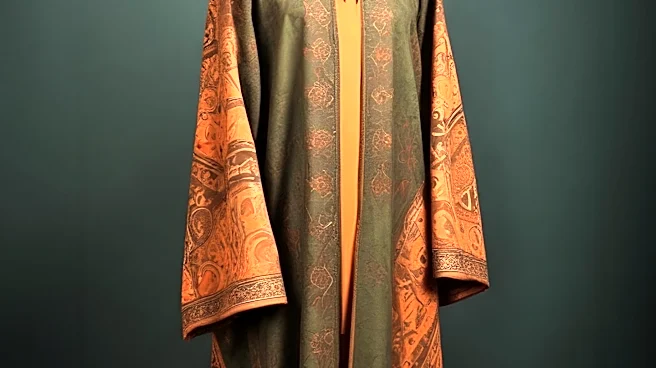
On April 20, 1928, the Brooklyn Museum in New York City hosted a significant Albanian Costumes Exhibition. The event showcased a collection of twelve precious Albanian costumes lent by American diplomat John Hamlin, alongside other acquisitions from the museum's
collection. Faik Konitza, the Minister of the Albanian Republic in the U.S., delivered the keynote speech, emphasizing the historical and cultural significance of Albanian national dress, including its influence on the so-called 'Greek' costume. The exhibition also featured a musical performance by Thoma Nassi, who played traditional Albanian music on the flute, accompanied by Howard Layman on piano. Konitza's speech highlighted Lord Byron's observations on Albanian attire from his 1809 visit, where Byron described the 'magnificent' dresses and their expensiveness, noting their gradual disappearance due to standardization.
Why It's Important?
This exhibition was a pioneering cultural event, marking the first time Albanian costumes of such substance and magnitude were publicly displayed in the U.S. It served as a crucial platform for introducing Albanian heritage and culture to an American audience, fostering diplomatic and cultural exchange. The event's success, as noted by The New York Times, underscored the power of cultural diplomacy and the role of institutions like the Brooklyn Museum in preserving and showcasing global diversity. Konitza's speech, now published for the first time in English, provides valuable historical insight into the perception and evolution of Albanian national dress, linking it to prominent figures like Lord Byron and addressing the broader theme of cultural standardization versus preservation. The exhibition's impact extended to inspiring further interest, with discussions of repeat events and the recognition of its 'propaganda' value for a country.
What's Next?
The article suggests a potential revival of this historic event on its centennial, April 20, 2028, at the Brooklyn Museum, aiming to replicate the original Albanian Costume Exhibition. This initiative could reignite interest in Albanian cultural heritage and the unique tradition of making and wearing Albanian national dress. Such a revival would offer an opportunity to reflect on the changes in cultural preservation and global interconnectedness over the past century. Furthermore, the publication of Konitza's speech, which was originally intended for the Brooklyn Museum's Quarterly but never materialized, opens new avenues for scholarly research and public understanding of Albanian history and its diplomatic efforts in the early 20th century. The fate of John Hamlin's original twelve costumes, now part of The Metropolitan Museum of Art's collection, could also become a focal point for future exhibitions or studies.
Beyond the Headlines
The exhibition and Konitza's speech delve into deeper implications concerning cultural identity, the impact of globalization on traditional practices, and the role of museums as 'archives of the imagination.' Lord Byron's observations on the 'magnificent' and expensive Albanian dresses, and Konitza's lament over the 'modern mania' for uniformity, highlight a timeless tension between cultural distinctiveness and the homogenizing forces of progress. The discussion about the 'Greek' costume being a 'debased imitation' of Albanian dress also touches upon complex historical narratives of cultural appropriation and influence in the Balkans. This event serves as a powerful reminder of how cultural artifacts and diplomatic efforts can intertwine to shape national narratives and international perceptions, emphasizing the enduring value of preserving unique cultural expressions against the backdrop of an increasingly standardized world.