
What's Happening?
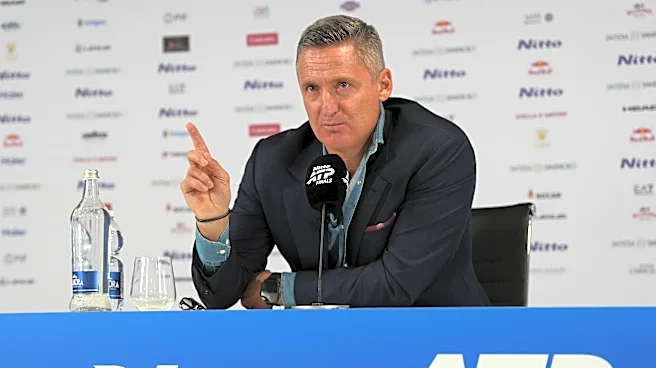
ATP Chairman Andrea Gaudenzi announced that the men's tennis tour is taking a 'wait-and-see' stance regarding future tournaments in the Middle East. This decision comes amidst ongoing geopolitical conflicts
involving Iran, the United States, and Israel, as well as Houthi attacks on Saudi Arabia, which have raised significant security and travel concerns across the Gulf region. Several international sports events in the area have already been canceled or postponed, including the Six Kings Slam exhibition and the WTA Finals, which were relocated to Indian Wells, California. Gaudenzi emphasized the ATP's primary concern for the safety of players and staff, noting past travel issues experienced by players like Daniil Medvedev and Andrey Rublev after competing in Dubai. Despite the current uncertainty, upcoming tennis events in the region include the WTA's Abu Dhabi Open in January, followed by women's events in Doha and Dubai, and men's ATP 500 tournaments in Doha and Dubai in February. The ATP's long-term plan to launch a 10th Masters 1000 tournament in Saudi Arabia by 2028 remains on track, contingent on monitoring the geopolitical situation.
Why It's Important?
The ATP's cautious approach to Middle East tournaments highlights the significant impact of geopolitical instability on international sports and event planning. The decision directly affects the scheduling and potential relocation of high-profile tennis events, influencing player participation, sponsorship deals, and broadcast revenues. For the United States, the relocation of events like the WTA Finals to Indian Wells demonstrates how global conflicts can shift economic and cultural opportunities domestically. The safety concerns for athletes and staff underscore the broader risks associated with operating in volatile regions, potentially leading to increased insurance costs and logistical complexities for sports organizations. Furthermore, the ATP's commitment to a future Masters 1000 tournament in Saudi Arabia, despite current tensions, indicates the substantial financial investments and strategic importance placed on expanding tennis into new markets, even as security challenges persist. This situation also reflects a broader trend where major sports leagues must navigate complex international relations, balancing commercial interests with ethical responsibilities and participant safety.
What's Next?
The ATP will continue to monitor the geopolitical situation in the Middle East closely, with decisions on future tournaments likely to be made on an ongoing basis as conditions evolve. Upcoming tournaments, including the WTA's Abu Dhabi Open and ATP 500 events in Doha and Dubai, are currently scheduled to proceed, but their status could change if security concerns escalate. The long-term plan for a Masters 1000 tournament in Saudi Arabia by 2028 will also remain under review, with its realization dependent on regional stability. Stakeholders, including players, sponsors, and host cities, will be closely watching developments, as any further cancellations or relocations could have significant financial and logistical implications. The ATP's strategy will likely involve continuous assessment of travel advisories, security intelligence, and diplomatic efforts to ensure the safety of all participants while attempting to maintain its global tournament calendar.
Beyond the Headlines
This situation extends beyond immediate tournament scheduling, touching upon the broader intersection of sports, global politics, and human security. The ATP's dilemma reflects a growing challenge for international sports organizations: how to expand into lucrative emerging markets while navigating complex geopolitical landscapes and ensuring the well-being of participants. The reliance on 'wait-and-see' approaches can create uncertainty for athletes and fans, potentially impacting player morale and fan engagement. Moreover, the significant financial investments, such as the reported two-billion-dollar infrastructure project in Saudi Arabia, highlight the economic stakes involved and the potential for sports to be used as a tool for soft power and national branding. This scenario also raises ethical questions about hosting events in regions with ongoing conflicts or human rights concerns, prompting a continuous debate about the responsibilities of global sports bodies beyond purely athletic competition.