



What's Happening?
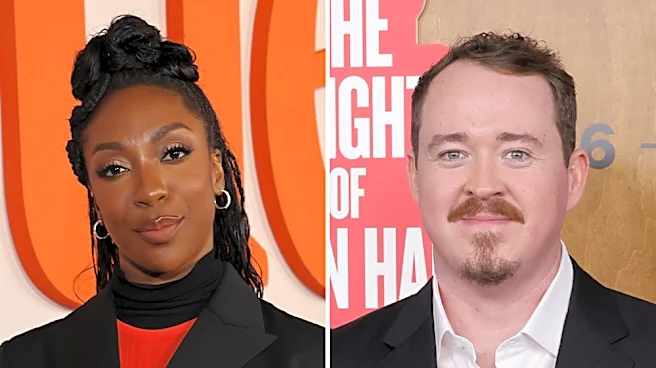
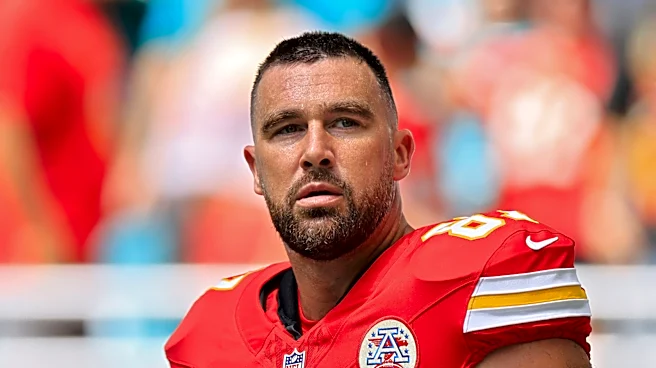
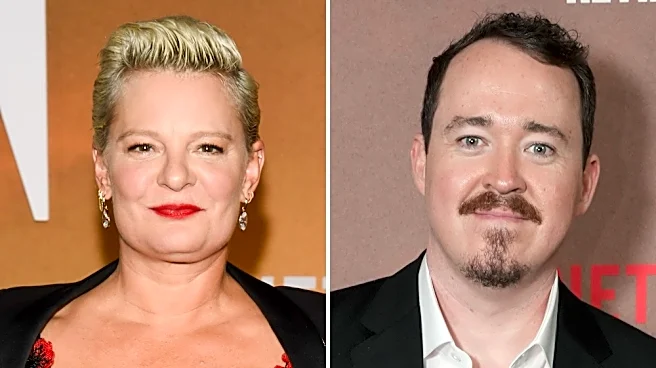
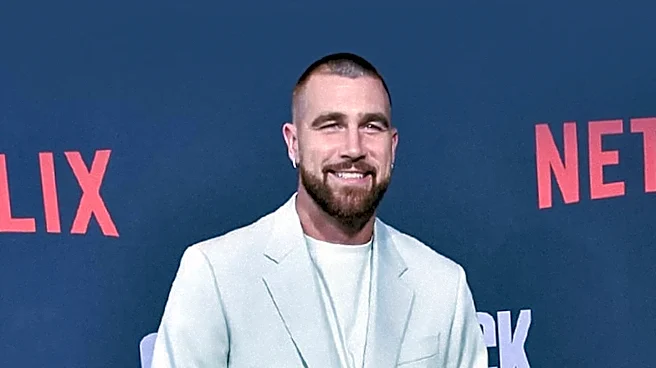
Kansas City Chiefs star Travis Kelce is facing criticism after his Instagram account liked a clip of comedian Shane Gillis' controversial 'Saturday Night Live' monologue. Attorney and activist Cheyenne Hunt has argued that Kelce's endorsement clashes
with the 'female-friendly' image cultivated by the Kelce family, which has significantly contributed to their brand's appeal to women. A source close to Kelce stated that he is a 'massive fan of the show' and was 'supporting a friend,' noting Gillis' prior appearance at Kelce's Tight End University event. Gillis' monologue included jokes about women's gym clothes and he was previously fired from 'SNL' years ago due to resurfaced racist and homophobic remarks. Hunt's criticism highlights the perceived inconsistency between Kelce's public persona, which has attracted a large female audience, and his apparent support for content deemed misogynistic.
Why It's Important?
This incident is important because it underscores the scrutiny public figures, particularly those with broad appeal, face regarding their online activities and associations. The Kelce family, including Travis and his brother Jason, has successfully built a lucrative entertainment brand by projecting an image of 'safe for you' masculinity, which has resonated strongly with female audiences. This brand strategy has led to significant commercial success, including podcasts and brand deals. The controversy challenges the authenticity of this carefully crafted image and could potentially alienate a segment of their fan base. It raises questions about the responsibility of celebrities to align their public actions, even seemingly minor ones like social media 'likes,' with the values they implicitly or explicitly promote to their audience, especially when those values are central to their commercial viability.
What's Next?
The immediate future will likely involve continued public discussion and debate surrounding Kelce's social media activity and its implications for his brand. Activists like Cheyenne Hunt may continue to vocalize their concerns, potentially prompting further responses from Kelce or his representatives. The incident could lead to a re-evaluation of how the Kelce brand manages its public image and social media engagement, particularly concerning potentially controversial content. Depending on the sustained public reaction, there might be pressure from sponsors or partners who have invested in the Kelce family's 'female-friendly' image. The situation could also serve as a case study for other public figures on the impact of seemingly minor online interactions on their carefully constructed public personas and commercial interests.
Beyond the Headlines
Beyond the immediate controversy, this event touches upon broader themes of celebrity accountability, the commodification of public image, and the evolving landscape of social media ethics. The 'golden retriever, girl dad' persona adopted by the Kelce brothers represents a strategic branding effort to appeal to a specific demographic, and any perceived deviation from this image can have significant repercussions. It highlights the tension between personal expression and professional branding in the digital age, where every online action can be scrutinized and interpreted. The incident also reflects the growing power of activist voices on social media to hold public figures accountable, demonstrating how quickly a seemingly private action can become a public relations challenge with ethical and commercial dimensions. This situation could contribute to a larger conversation about the authenticity of celebrity endorsements and the expectations placed on public figures to embody certain values.