





What's Happening?
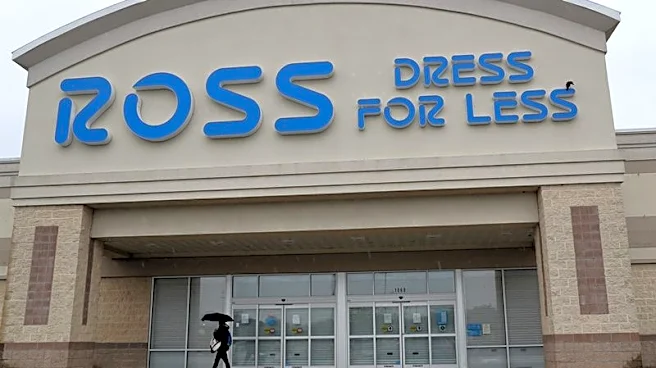
Ross Stores, a value retailer, exceeded third-quarter fiscal 2026 expectations, with sales rising 12% to $6.3 billion and diluted EPS reaching $1.91, surpassing both company guidance and analyst consensus. Despite these strong financial results, CEO Jim
Conroy stated that consumer confidence is "extremely low," a sentiment he shared in response to an analyst's question. This low confidence is reflected in a September consumer sentiment reading of 48.1, which is considered recessionary. Conroy emphasized the company's strategy to maintain low average prices to retain its core modest-income customer base. The company's comparable store sales grew 8%, primarily driven by an increase in transactions across all income levels and major product categories. Unseasonably warm weather in California negatively impacted sales, while the Midwest led in customer gains. The company's operating margin improved to 12.3%, up 70 basis points.
Why It's Important?
The CEO's remarks about low consumer confidence, despite Ross Stores' strong performance, highlight a potential disconnect or a strategic advantage for value retailers in the current economic climate. While many retailers might struggle with reduced consumer spending during periods of low confidence, Ross Stores' focus on affordability appears to be attracting more shoppers. This suggests that consumers are actively seeking value, which could lead to a shift in retail spending patterns, benefiting discount chains over full-price retailers. The impact of fuel costs on the company's holiday profit range also underscores the broader economic pressures affecting businesses, particularly those with extensive supply chains. Investors are now evaluating whether the company's stock, which saw a post-earnings dip, is undervalued given its ability to attract traffic and maintain margins amidst challenging economic indicators.
What's Next?
Ross Stores has provided fourth-quarter EPS guidance of $2.16 to $2.25, with a midpoint slightly below Wall Street's consensus, primarily due to higher fuel costs. The company anticipates comparable store sales growth of 4%-5% for the fourth quarter, against a tough comparison from the previous year. The company's full-year EPS outlook has been raised to $8.75 to $8.84, which includes a significant portion from IEEPA tariff refunds recognized in the second quarter. Without these refunds, the operational earnings are still projected to be strong. Ross Stores continues its share buyback program, having repurchased 1.4 million shares for $319 million in the quarter, and plans to complete $1.275 billion in buybacks this year. The company also pays a quarterly dividend of $0.445. The December sales trend will be a key indicator for investors, especially given the historical lag between consumer sentiment and spending.
Beyond the Headlines
The situation at Ross Stores points to a broader economic trend where inflationary pressures and low consumer confidence are driving a flight to value. This could have long-term implications for the retail landscape, potentially accelerating the growth of discount retailers and forcing traditional retailers to re-evaluate their pricing strategies and value propositions. The company's ability to maintain strong operating margins while keeping prices low suggests efficient cost management and a deep understanding of its target demographic. This strategy not only helps Ross Stores weather economic downturns but also strengthens its market position by fostering customer loyalty among budget-conscious consumers. The emphasis on value could become a more permanent fixture in consumer behavior, even as economic conditions improve, reshaping the competitive dynamics within the retail sector.