







What's Happening?
China has announced an ambitious plan to achieve initial large-scale application of all-solid-state batteries by 2030. This initiative is part of the 15th Five-Year Plan (2026–30) for the development of the new battery industry, issued by seven government
departments, including the Ministry of Industry and Information Technology and the National Development and Reform Commission. The plan also targets long-life lithium batteries to reach a life cycle of 15,000 times. All-solid-state batteries are highlighted for their potential to offer higher theoretical energy density, enhanced safety, and lower costs compared to the currently dominant lithium-ion batteries, particularly in the electric vehicle sector. The new battery sector in China has already demonstrated significant growth, with its total output value exceeding 1 trillion yuan ($149 billion) during the 14th Five-Year Plan (2021–25) period, securing a major share of the global market. New batteries, encompassing lithium, sodium, and flow batteries, are recognized as efficient energy storage and conversion devices characterized by rapid technological advancements and broad applications.
Why It's Important?
This strategic push by China into advanced battery technology, particularly all-solid-state batteries, has significant implications for global industries, including the U.S. The development and large-scale adoption of these batteries could disrupt the current market dominance of lithium-ion technology, impacting electric vehicle manufacturers, energy storage providers, and raw material suppliers worldwide. If China successfully achieves its goals, it could gain a substantial competitive advantage in the global battery market, potentially influencing supply chains and technological standards. U.S. companies and policymakers will need to monitor these developments closely, as a shift towards all-solid-state batteries could necessitate significant investments in research, development, and manufacturing capabilities to remain competitive. The emphasis on longer-life batteries also promises to enhance the sustainability and economic viability of electric vehicles and renewable energy storage, benefiting consumers through potentially lower costs and extended product lifespans. The U.S. energy sector, in particular, stands to be affected by advancements in energy storage solutions, which are crucial for integrating intermittent renewable energy sources into the grid.
What's Next?
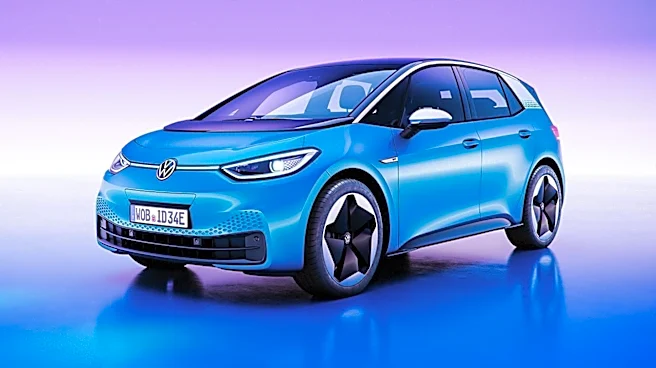
Following the announcement of the 15th Five-Year Plan, China is expected to accelerate its efforts in research and development, industrial transformation, and the construction of a comprehensive application ecosystem for new battery technologies. The plan outlines 19 key tasks and five special columns across five areas, including accelerating whole-chain innovation and promoting industrial upgrading. Breakthroughs are anticipated in advanced electrode materials, new electrolytes, and high-end auxiliary materials, alongside significant progress in new system battery research. The integration of next-generation battery technology with clean energy and energy-consuming terminals is also a priority, aiming to empower smart devices and electrification across various sectors such as automobiles, ships, aviation, intelligent robots, engineering machinery, and agricultural equipment. This strategic direction suggests a concerted effort to establish new batteries as a foundational element for a new energy system and to cultivate new quality productive forces, positioning the industry as a critical support for building a manufacturing, energy, transportation, and digital powerhouse.
Beyond the Headlines
The strategic elevation of the new battery industry from a mere component supplier to an independent and foundational sector underscores a broader shift in China's industrial policy. This move reflects a recognition of batteries as critical infrastructure for future economic growth and national security, particularly in the context of global energy transitions and technological competition. The focus on all-solid-state batteries, with their promise of enhanced safety and energy density, could lead to a paradigm shift in how energy is stored and utilized across various applications, from consumer electronics to large-scale grid storage. This could also trigger a global race for technological supremacy in battery development, potentially leading to increased international collaboration or heightened competition. Furthermore, the plan's emphasis on integrating battery technology with clean energy and diverse applications highlights a holistic approach to electrification, aiming to create a comprehensive ecosystem that supports sustainable development and technological innovation across multiple sectors. This long-term vision could reshape global manufacturing landscapes and redefine energy independence for nations.