




What's Happening?
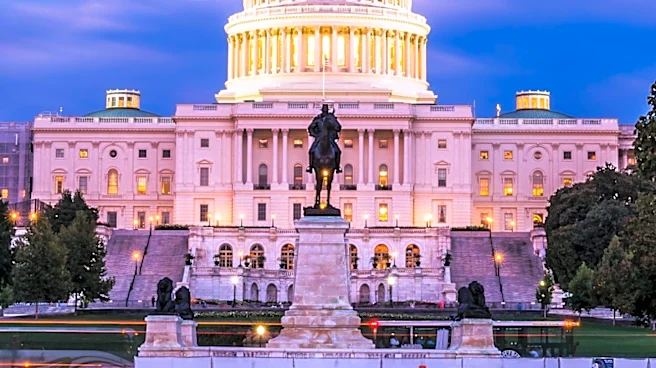
The District of Columbia is facing a bleaker financial outlook than previously anticipated, with an updated report from the Office of the D.C. Auditor projecting a revenue shortfall of $300 million to $400 million for the current fiscal year. The city's
gross revenue is now expected to be approximately $11.8 billion, a decrease from the $12.2 billion initially projected in March. D.C. Auditor Kathleen Patterson highlighted that while $300 million might seem small within a $22 billion budget, it significantly impacts dollar allocation. This revised forecast is attributed to a struggling job market and a slumping commercial real estate sector, which continue to undermine the city's economic viability. The report also cites interference from Congress in the city's tax code and general economic uncertainty as contributing factors. Commercial real estate is identified as a crucial component of D.C.'s economy, with the office vacancy rate exceeding 22% in the second quarter of this year, a notable increase from 14% in 2019, according to CBRE.
Why It's Important?
The projected revenue decline signals significant challenges for D.C.'s fiscal health and its ability to fund public services and initiatives. A weakened job market directly impacts individual income tax revenues, while high office vacancy rates reduce property tax collections and business income taxes. This situation could lead to difficult decisions regarding budget allocations, potentially affecting public programs, infrastructure projects, and city services. The auditor's emphasis on commercial real estate as a potential turnaround factor underscores its critical role in the city's economic recovery. If the commercial real estate market continues to struggle, it could exacerbate the revenue shortfall, leading to a prolonged period of fiscal constraint. Furthermore, the report highlights the vulnerability of local economies to broader national and international economic volatility, as well as the impact of federal legislative actions on local fiscal autonomy.
What's Next?
D.C. council members will need to consider the implications of this revenue shortfall as they deliberate on proposals to raise taxes in the fall. The auditor's report serves as a critical input for these policy discussions, potentially influencing decisions on tax rates and spending priorities. While the Office of the Chief Financial Officer had previously indicated no material changes to its projections, the auditor's updated assessment provides a more cautious outlook, emphasizing the need for vigilance in monitoring economic conditions. The city will also need to strategize on how to revitalize its commercial real estate sector, which Auditor Patterson believes could be a key driver for revenue recovery. This could involve policy initiatives aimed at attracting businesses, repurposing vacant office spaces, or incentivizing new development. The ongoing uncertainty surrounding congressional actions on D.C.'s tax proposals will also remain a significant factor influencing the city's financial planning.
Beyond the Headlines
The persistent struggles in D.C.'s commercial real estate market, particularly the high office vacancy rates, reflect a broader national trend influenced by evolving work models such as hybrid and remote work. This shift challenges traditional urban economic models that heavily rely on office occupancy and daily commuter traffic. The long-term implications could include a fundamental rethinking of urban planning, zoning laws, and the diversification of city economies away from a heavy reliance on commercial office spaces. The report also subtly touches upon the ongoing tension between local governance and federal oversight, as congressional interference in D.C.'s tax code adds another layer of complexity to the city's fiscal management. This dynamic raises questions about the extent of home rule for the District and its ability to independently manage its economic destiny, especially during periods of financial strain.