



What's Happening?
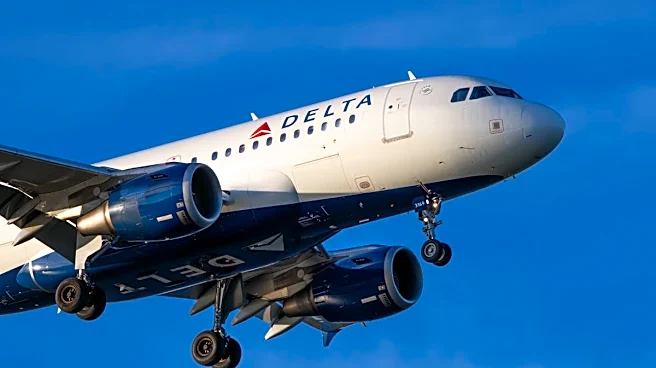
The 11th Circuit Court of Appeals has vacated a September 2025 U.S. Department of Transportation (DOT) order that aimed to end the antitrust-immunized joint venture between Delta Air Lines and Aeromexico. The court ruled on August 20 that the DOT's analysis
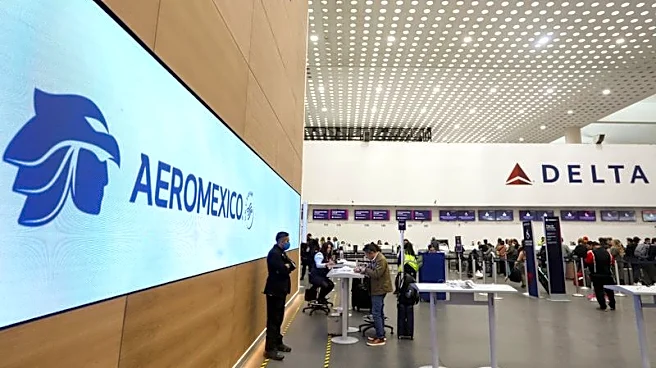
was arbitrary and capricious. The DOT's review primarily focused on conditions at Mexico City’s Benito Juárez Airport, which the court found to be a far more limited market review compared to the broad country-pair and city-pair analysis used when the joint venture was initially approved in 2016. Furthermore, the court noted that the DOT applied inconsistent standards when compared with similar U.S.-Japan joint ventures. This ruling allows the nearly decade-old partnership, which covers scheduling, pricing, capacity, and frequent-flyer reciprocity on U.S.-Mexico routes, to continue. Delta Air Lines holds a 20% equity stake in Aeromexico. Both carriers have welcomed the decision, highlighting its benefits for connectivity, competition, U.S. jobs, and consumers. The DOT has stated it will consider all available legal options.
Why It's Important?
This court decision holds significant implications for the airline industry, particularly regarding the stability and regulatory framework of antitrust-immunized alliances. The ruling establishes a precedent that once antitrust immunity is granted, it cannot be withdrawn without the same rigorous analytical process used for its initial approval. This provides a degree of regulatory certainty for other immunized alliances operating across the Atlantic and Pacific, potentially reducing the perceived regulatory risk for carriers contemplating cross-border equity stakes. For Delta, the decision safeguards both the economic benefits of its joint venture with Aeromexico and the strategic rationale behind its 20% equity investment. The outcome also highlights the tension between regulatory bodies and judicial oversight in interpreting and enforcing aviation agreements, especially when geopolitical factors or broader diplomatic disputes might influence regulatory actions. The unresolved question of whether the DOT will re-litigate the issue with a more robust analysis or integrate it into diplomatic negotiations with Mexico City underscores the ongoing complexities in international aviation policy.
What's Next?
The U.S. Department of Transportation (DOT) has indicated that it will consider all available legal options following the 11th Circuit Court of Appeals' decision. This could involve appealing the ruling or attempting to re-evaluate the joint venture with a more comprehensive analysis that addresses the court's concerns regarding the scope and consistency of its review. Alternatively, the DOT might choose to integrate this issue into broader diplomatic negotiations with Mexico City, especially given that the initial termination order was widely perceived as leverage in a U.S.-Mexico aviation dispute over slot confiscations at Benito Juárez Airport. For Delta Air Lines and Aeromexico, the immediate future involves the continuation of their joint venture, allowing them to proceed with their coordinated operations on U.S.-Mexico routes. The industry will be closely watching the DOT's next move, as it will further define the regulatory landscape for international airline partnerships and the conditions under which antitrust immunity can be challenged or revoked.
Beyond the Headlines
The overturning of the DOT's order has deeper implications beyond the immediate operational and financial benefits for Delta and Aeromexico. It underscores the delicate balance between regulatory authority and judicial review in complex international business agreements. The court's emphasis on consistent analytical rigor for both granting and revoking antitrust immunity could set a significant legal benchmark, potentially influencing how future cross-border collaborations are structured and regulated across various industries. This ruling might encourage greater confidence in long-term international partnerships by reducing the perceived risk of arbitrary regulatory reversals. Furthermore, it highlights the potential for legal challenges to act as a check on regulatory actions that may be influenced by political or diplomatic pressures, rather than purely economic or market-based considerations. The case also brings to light the intricate interplay between domestic legal frameworks and international aviation policy, where decisions can have ripple effects on global trade, competition, and diplomatic relations.