






What's Happening?
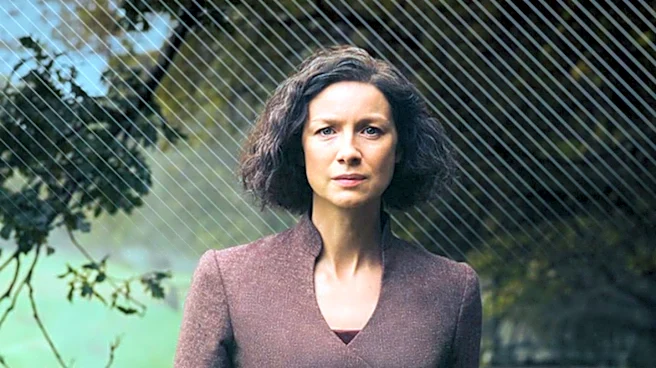
Caitríona Balfe is featured in the new film 'Tenzing,' which premiered on Apple TV. The movie re-examines the 1953 ascent of Mount Everest, focusing on the Sherpa mountaineer Tenzing Norgay, who reached the summit alongside Edmund Hillary. Balfe portrays
Jill Henderson, the expedition secretary. The film, directed by Jennifer Peedom, aims to center Tenzing's narrative, highlighting the class tensions, colonial attitudes, and the struggle for recognition he faced as a key member of the British-led endeavor. Genden Phuntsok stars as Tenzing, with Tom Hiddleston as Edmund Hillary and Willem Dafoe as expedition leader John Hunt. Thinley Lhamo plays Tenzing’s wife, Dawa, whose support is integral to his journey. The film contrasts the Western perspective of Everest as a peak to be conquered with Tenzing's view of Chomolungma as a sacred mountain tied to his identity and spirituality.
Why It's Important?
The release of 'Tenzing' is significant as it offers a re-evaluation of a pivotal moment in mountaineering history, challenging the traditionally Western-centric narrative. By focusing on Tenzing Norgay's story, the film brings to light issues of historical recognition, cultural perspective, and the often-overlooked contributions of indigenous people in major historical achievements. This shift in storytelling can influence how historical events are perceived and taught, promoting a more inclusive understanding of global history. For audiences, it provides a deeper insight into the complexities of the 1953 Everest expedition, moving beyond a simple tale of conquest to explore themes of class, colonialism, and spirituality. The film's emphasis on Tenzing's perspective can foster greater appreciation for diverse cultural interpretations of natural landmarks and human endeavors.
What's Next?
The film 'Tenzing' is currently available for streaming on Apple TV, allowing a broad audience to engage with its narrative. Its release is likely to spark further discussions about historical representation in media and the importance of diverse perspectives in storytelling. The film's director, Jennifer Peedom, known for her acclaimed mountaineering documentaries, brings a track record of high-altitude storytelling, suggesting that 'Tenzing' will contribute to the ongoing conversation about the ethics and human elements of extreme mountaineering. The film's impact may extend to educational contexts, encouraging a more nuanced examination of historical events and the roles played by various individuals and cultures.
Beyond the Headlines
Beyond its immediate narrative, 'Tenzing' touches upon deeper implications regarding the ethics of historical documentation and the power dynamics inherent in recounting major events. The film implicitly questions who gets to tell a story and whose contributions are ultimately remembered. By highlighting the struggle for Tenzing's recognition, it underscores the broader issue of systemic biases in historical narratives, particularly concerning non-Western individuals in Western-led expeditions. This can lead to a re-examination of other historical accounts, prompting a more critical approach to understanding the past and ensuring that diverse voices are heard and acknowledged. The film also subtly explores the cultural and spiritual significance of mountains, contrasting it with the Western drive for conquest, which can foster a more respectful and holistic view of natural environments.