





What's Happening?
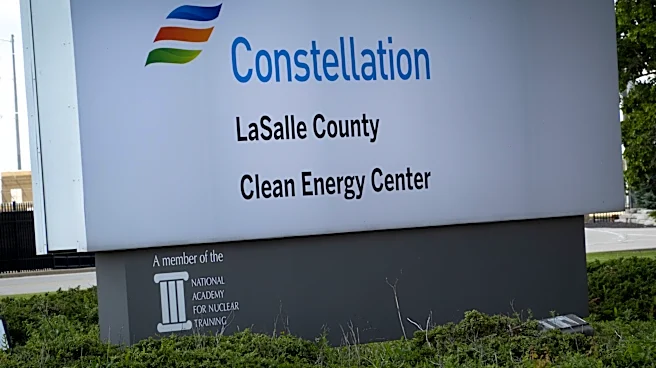
Constellation Energy announced on November 25, 2026, the completion of the sale of approximately 4.4 gigawatts of predominantly natural gas-fired generation assets in the PJM wholesale power market to LS Power. This transaction fulfills the Federal Energy Regulatory
Commission’s (FERC) divestiture requirements related to Constellation's acquisition of Calpine, which was finalized in January 2026. The sale encompassed five operating facilities within the PJM market. This move is part of Constellation Energy's strategy to refine its generation portfolio, shifting focus towards cleaner, contracted output. The divestiture, combined with stronger operating cash flow and long-term power contracts, aims to enhance the company's financial stability and strategic direction. The company has also raised its 2026 adjusted operating EPS guidance, indicating a positive outlook on its refined business model.
Why It's Important?
This divestiture is significant for Constellation Energy as it allows the company to concentrate on its core strategy of providing clean and contracted energy, primarily from its nuclear fleet. By shedding natural gas assets, Constellation reduces its exposure to fossil fuel markets and aligns more closely with growing demand for clean energy, particularly from sectors like AI and data centers. This strategic shift is expected to lead to more stable cash flows and improved earnings quality, as the company leverages its nuclear capacity and long-term power purchase agreements. For the broader energy market, this transaction highlights a continuing trend of energy companies optimizing their portfolios to meet regulatory requirements and capitalize on the transition to cleaner energy sources. Investors may view this as a positive step, as it de-risks the company's operational profile and strengthens its position in the evolving energy landscape.
What's Next?
Following this divestiture, Constellation Energy is expected to continue its focus on securing multi-decade agreements with creditworthy customers for its clean energy output. The company has already secured over 8,500 MW of long-term deals, which will underpin its future earnings. Management's raised 2026 adjusted operating EPS guidance suggests an anticipated base earnings growth potential exceeding 20% annually through 2029. The immediate next steps will involve the operational and balance sheet execution related to its enlarged fleet post-Calpine acquisition, ensuring efficient integration and management of its remaining assets. The company will also need to manage potential risks associated with high leverage and any unplanned nuclear outages, which could directly impact earnings and cash generation. The market will likely monitor Constellation's ability to consistently deliver contracted volumes and maintain its industry-leading nuclear capacity factors.
Beyond the Headlines
The completion of this divestiture by Constellation Energy signals a broader strategic realignment within the U.S. energy sector, emphasizing the increasing value placed on clean and contracted power generation. This move reflects not only regulatory pressures but also evolving market demands driven by technological advancements like AI and data centers, which require reliable and sustainable energy sources. The transaction could encourage other power and grid operators to consider similar capital recycling strategies, divesting from less desirable assets to invest in cleaner, more stable energy portfolios. This shift has long-term implications for energy infrastructure development, potentially accelerating investments in nuclear and renewable energy technologies. It also underscores the financial community's growing preference for companies with clear environmental, social, and governance (ESG) commitments, as such strategic divestitures can enhance a company's attractiveness to investors seeking sustainable growth.