







What's Happening?
Mega broker TQL has responded to a federal racketeering lawsuit filed by six motor carriers, asserting that the carriers are responsible for their own lost freight opportunities due to 'poor business practices.' The lawsuit, filed in September, accuses
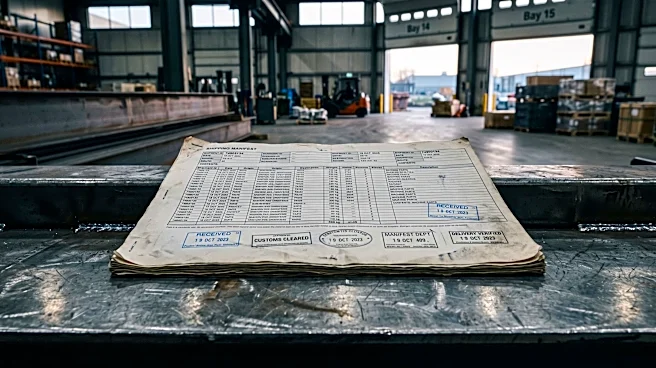
TQL and C.H. Robinson of collaborating with 'illegal carriers' within the Super Ego network to undercut prices and push other motor carriers out of the freight market. The complaint seeks legal action under the Racketeer Influenced and Corrupt Organizations Act (RICO), typically used against organized crime, highlighting the brokers' alleged ties to 'chameleon carriers' in the Super Ego network. TQL's response includes motions to dismiss the case, filed in federal court in Texas. The original plaintiffs include Stevens Trucking Co., Western Flyer Express, LLC, D&M Carriers, LLC d/b/a Freymiller Trucking, IWX Motor Freight, LLC, Christenson Transportation Inc., and E.O.S. Inc. The lawsuit claims a 'decline of lawful asset-based trucking operations' is driven by a coordinated effort between brokers and illegal carriers, citing instances where C.H. Robinson or TQL were listed as carriers on bills of lading for Super Ego-affiliated drivers who allegedly exceeded hours-of-service limits.
Why It's Important?
This lawsuit and TQL's defense highlight significant tensions and alleged illicit practices within the U.S. freight brokerage and trucking industry. The accusations of racketeering and collusion with 'chameleon carriers' could expose systemic issues regarding fair competition, carrier compliance, and operational ethics. If the allegations are proven true, it could lead to increased scrutiny and potential regulatory changes for freight brokers and their relationships with third-party carriers. The case also brings to light the economic pressures faced by legitimate trucking companies, which claim to be losing business to lower-bidding, potentially non-compliant operators. The outcome could redefine accountability in the supply chain, impacting how freight is brokered and transported across the nation. Furthermore, the use of RICO statutes underscores the severity of the claims, suggesting that the plaintiffs believe these are not merely business disputes but rather organized illicit activities that undermine the integrity of the trucking sector.
What's Next?
TQL has requested the court to dismiss the lawsuit, arguing that the plaintiffs have failed to establish a direct causal link between any TQL violation and their alleged injuries. Should the court deny the dismissal, TQL has also requested a change of venue from the federal court in Texas to Clermont County, Ohio, citing stipulations in its carrier agreements. The legal proceedings will likely involve further discovery and arguments regarding the sufficiency of the plaintiffs' claims under RICO and the Lanham Act. The plaintiffs, represented by their legal team, will need to provide more specific evidence linking TQL's actions directly to their lost freight opportunities. The trucking industry will closely watch the developments, as the outcome could set precedents for how brokers operate and how carriers can seek recourse against alleged unfair practices. The case may also prompt industry associations and regulators to review existing guidelines and enforcement mechanisms related to carrier vetting and freight pricing.
Beyond the Headlines
The lawsuit delves into the complex and often opaque relationships between large freight brokers and the vast network of motor carriers. The term 'chameleon carriers' points to a deeper issue of regulatory evasion, where entities may operate under different names or structures to avoid compliance with safety and labor regulations, thereby gaining an unfair cost advantage. This practice not only harms legitimate carriers but also raises concerns about road safety and driver welfare, as alleged violations of hours-of-service limits suggest potential risks. The dispute also highlights the intense competition in the freight market, where low rates can drive some carriers to cut corners. The legal battle could force a re-evaluation of the due diligence expected from brokers when partnering with carriers and may lead to calls for greater transparency and stricter enforcement to ensure a level playing field and safer transportation practices across the U.S. logistics sector.