





What's Happening?
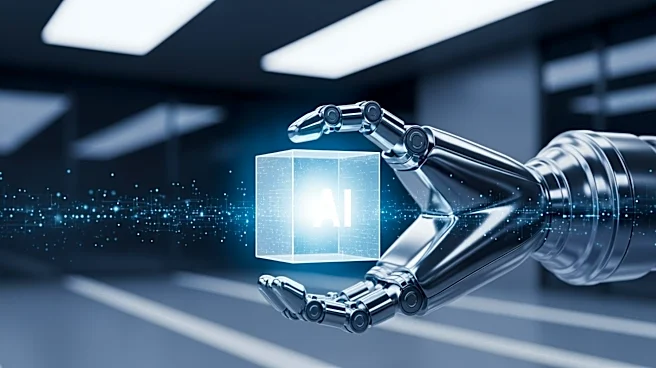
Kawasaki Robotics is set to debut its RL030N physical AI platform at the Automate event in Chicago. This new platform is designed to integrate advanced robotics with artificial intelligence, machine learning, and real-time control systems, aiming to transform
industrial automation. The RL030N features an eight-degree-of-freedom design, which enhances dexterity and flexibility, making it suitable for dynamic and confined environments. The platform utilizes Kawasaki’s open KRNX real-time application programming interface (API), allowing for seamless integration with external AI software and machine learning systems. Additionally, Kawasaki will showcase its patented Pulseboard inspection technology, which improves weld inspection speed and accuracy. The company will also introduce other industrial robots, such as the MXP360L and BA013L, highlighting their capabilities in advanced motion control and flexible manufacturing.
Why It's Important?
The introduction of the RL030N platform by Kawasaki Robotics signifies a significant advancement in the field of industrial automation. By integrating AI and machine learning with robotics, Kawasaki aims to enhance the efficiency and precision of manufacturing processes. This development is crucial for industries seeking to improve productivity and reduce operational costs. The RL030N’s ability to operate in confined spaces and its enhanced dexterity address common challenges faced by traditional industrial robots. Furthermore, the Pulseboard technology offers a faster and more accurate inspection process, which is vital for maintaining quality control in manufacturing. These innovations could lead to increased adoption of robotics in various sectors, potentially transforming the landscape of industrial automation.
What's Next?
Kawasaki Robotics plans to demonstrate the capabilities of the RL030N and other new technologies at the Automate event. The company is likely to receive feedback from industry stakeholders, which could influence future developments and enhancements. As industries continue to seek automation solutions, Kawasaki’s innovations may drive further research and development in AI-integrated robotics. The success of these technologies could lead to broader implementation across different sectors, potentially setting new standards for industrial automation. Additionally, Kawasaki’s focus on real-time control and AI integration may inspire other companies to explore similar advancements, fostering competition and innovation in the robotics industry.