








What's Happening?
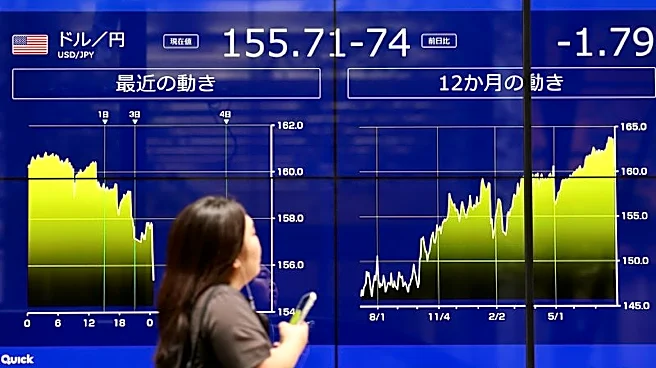
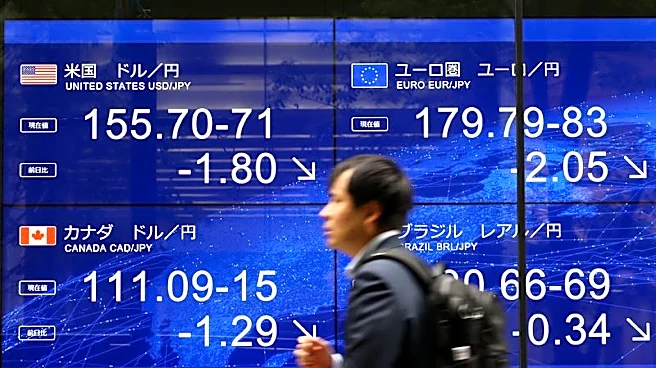
The U.S. dollar has experienced a significant decline against the Japanese yen following market interventions by the U.S. and Japan. Prior to the intervention, the dollar was trading at over 163 yen, reaching 40-year highs. However, after the intervention, it
fell below 160 yen and further dropped to nearly 155.20 yen. The interventions were confirmed by U.S. President Donald Trump and Japan's finance minister. The yen's prolonged weakness has been a concern for Japan, as it imports a large portion of its goods, leading to higher prices. The situation is exacerbated by high oil prices, increasing the cost of living in Japan.
Why It's Important?
The weakening of the U.S. dollar against the yen has significant implications for international trade and economic relations between the U.S. and Japan. A stronger yen could alleviate some of the inflationary pressures in Japan by reducing import costs, but it may also impact Japanese exports by making them more expensive. For the U.S., a weaker dollar could affect its trade balance and influence monetary policy decisions. The interventions highlight the complexities of currency markets and the challenges governments face in managing economic stability amid global financial fluctuations.
What's Next?
The market interventions may lead to further discussions and potential actions by both the U.S. and Japanese governments to stabilize their currencies. Financial analysts and policymakers will likely monitor the situation closely to assess the long-term effects on trade and economic growth. There may also be increased scrutiny on the effectiveness of such interventions and their impact on global financial markets. Future policy decisions could be influenced by the outcomes of these interventions, potentially leading to coordinated efforts to address currency volatility.