





What's Happening?
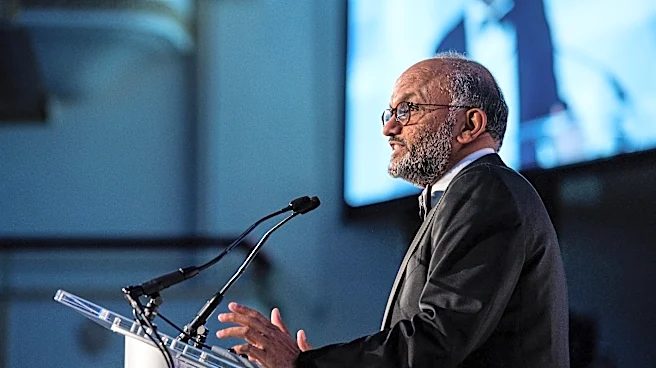
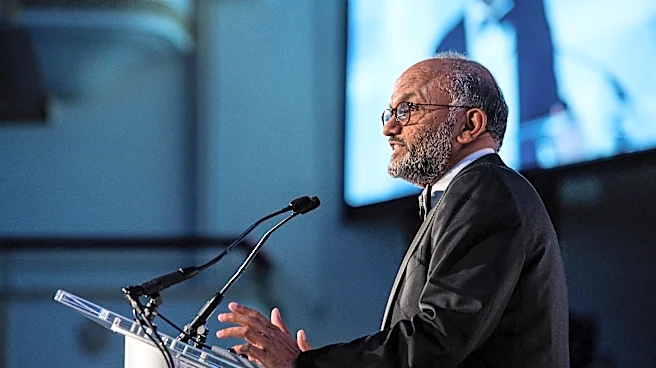
Richard McPhail officially took over as the Chief Executive Officer of Home Depot on November 23, succeeding Ted Decker, who stepped down from his roles as president and CEO. Decker, who recently returned from a temporary medical leave, will now serve
as the chair of the board. Concurrently, Ann-Marie Campbell has been appointed President and Chief Operating Officer, and Jordan Broggi has become the Chief Financial Officer. McPhail, who previously served as CFO since 2019, joined Home Depot in 2005. Campbell, a 41-year veteran of the company, will now oversee supply chain, customer experience operations, and online functions in addition to her previous responsibilities. Broggi, with 13 years at Home Depot, has led online, loyalty, credit, and payments initiatives. The leadership transition occurred during the week of Black Friday, shortly after Home Depot updated its full-year forecast, reporting third-quarter results that exceeded expectations.
Why It's Important?
This leadership change at Home Depot is significant for the U.S. retail sector, particularly in the home improvement market. Richard McPhail inherits a substantial enterprise, a $43 billion-a-quarter retailer, at a time when consumer spending patterns are shifting, with shoppers spending more per trip but making fewer visits. His background as CFO, overseeing financial operations, capital allocation, and corporate strategy, including key acquisitions, suggests a continued focus on strategic growth and financial discipline. The promotion of Ann-Marie Campbell, a long-time employee who started as a store associate, to President and COO, highlights the company's commitment to internal talent and operational expertise. The new leadership team will be tasked with navigating challenges such as high borrowing costs impacting home sales and remodeling, and integrating recent acquisitions to bolster the company's 'Pro' segment, which caters to contractors. The performance of the company under this new leadership will be closely watched as an indicator of broader trends in consumer retail and housing-related spending.
What's Next?
Under Richard McPhail's leadership, Home Depot will focus on integrating its recent acquisitions, particularly those aimed at expanding its 'Pro' sales to contractors. The success of these integrations and their impact on margins will be a key metric for the new CEO. The company will also need to address the ongoing trend of fewer customer transactions, despite an increase in average ticket size, especially as it heads into the critical holiday shopping season. The Black Friday weekend will serve as an early test for the new leadership to see if deal-driven shoppers can be enticed back into stores. Furthermore, the broader economic environment, characterized by high borrowing costs, will continue to influence home improvement spending, making the new team's strategic decisions on market share growth and operational efficiency crucial. The updated fiscal 2026 guidance, which projects total sales growth of about 4.5% and comparable sales growth of about 1.4%, indicates a steady but cautious outlook for the company's immediate future.
Beyond the Headlines
The transition of leadership at Home Depot, particularly the move of Ted Decker to board chair after a medical leave, underscores the importance of succession planning and corporate governance in large U.S. corporations. The interim setup during Decker's leave, where Ann-Marie Campbell and Richard McPhail effectively shared CEO duties, served as a 'trial run,' demonstrating a deliberate and structured approach to leadership transition. This strategy allowed the board to assess the capabilities of potential successors in real-time, minimizing disruption during a critical period. The company's emphasis on internal promotions, with Campbell's 41-year tenure and Broggi's 13 years, reflects a culture that values experience and institutional knowledge. This approach can foster stability and continuity, which are vital for a company of Home Depot's scale, especially as it navigates evolving market dynamics and consumer behaviors in the home improvement sector.