
What's Happening?
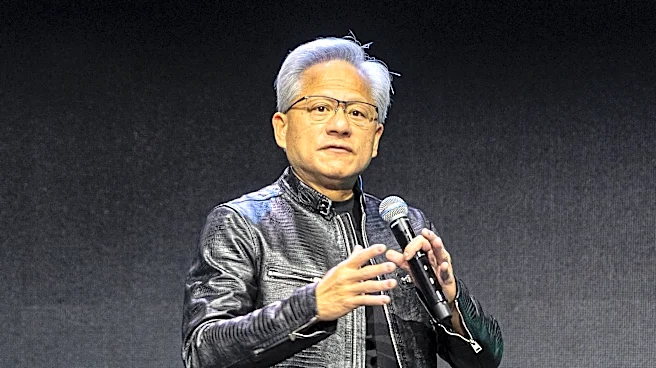
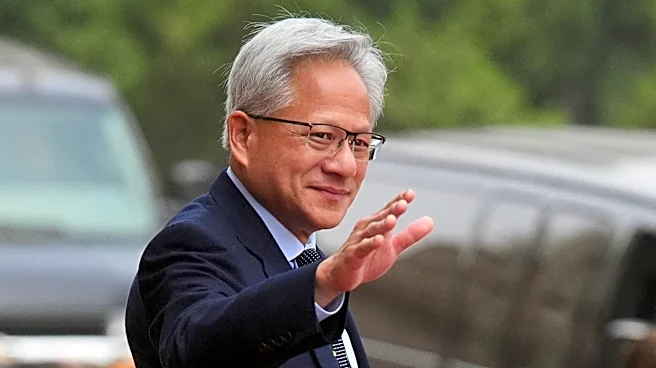
Nvidia CEO Jensen Huang has been reinstated to his position after resigning on November 12. His resignation followed disclosures of personal behavior inconsistent with the company's code of conduct, including
multiple reported affairs, one allegedly with a Chinese businesswoman suspected of being a spy for Beijing. During his first employee meeting since reinstatement, Huang expressed remorse, apologized to staff, and promised to improve. He also addressed succession planning, stating that Nvidia's unique business model and a team with multiple capable leaders negate the need for a traditional succession plan, which he believes would create unnecessary hierarchy. President Trump reportedly provided assurances to Nvidia's board regarding potential national security risks, facilitating Huang's return. Following the announcement of his return, Nvidia's stock surged over 30%, though shares fell on Tuesday.
Why It's Important?
The reinstatement of Jensen Huang as Nvidia's CEO carries significant implications for the technology sector and corporate governance. Nvidia is a major player in the semiconductor industry, and leadership stability is crucial for its market performance and strategic direction. The involvement of President Trump in providing assurances to the board regarding national security risks highlights the increasing intersection of corporate leadership, national security, and political influence, particularly concerning companies with global operations and sensitive technologies. Huang's assertion that Nvidia does not require a traditional succession plan challenges conventional corporate governance models, suggesting a reliance on a distributed leadership structure. This approach could either foster innovation and agility or create vulnerabilities if not managed effectively, especially given the circumstances of his prior resignation. The stock market's volatile reaction underscores investor sensitivity to leadership changes and corporate integrity.
What's Next?
Following his reinstatement, Jensen Huang will likely focus on stabilizing Nvidia's leadership and reaffirming its strategic direction. The company will need to manage any lingering concerns among investors and employees regarding the circumstances of his resignation and return. The board's decision, influenced by input from federal government officials, suggests ongoing scrutiny of Nvidia's operations, particularly concerning national security implications. It remains to be seen how Huang's unconventional stance on succession planning will evolve and whether it will be formally integrated into Nvidia's long-term governance strategy. The market will closely monitor Nvidia's stock performance and any further statements or actions from Huang and the board regarding corporate conduct and leadership stability. Huang's mention of being in therapy also indicates a personal commitment to addressing the issues that led to his resignation.
Beyond the Headlines
The Nvidia situation delves into complex ethical and legal dimensions beyond typical corporate leadership changes. The alleged involvement of a Chinese businesswoman suspected of espionage raises significant national security concerns, underscoring the vulnerabilities of high-tech companies to foreign influence and intelligence operations. The intervention of President Trump in the board's decision-making process blurs the lines between corporate autonomy and government oversight, setting a precedent for how the U.S. government might engage with private companies on matters deemed critical to national security. Furthermore, Huang's rejection of a traditional succession plan, while potentially innovative, could also be viewed as a risk, particularly in an industry as dynamic and competitive as semiconductors. This event highlights the evolving challenges of corporate governance in a geopolitical landscape where technology, national security, and personal conduct are increasingly intertwined.