




What's Happening?
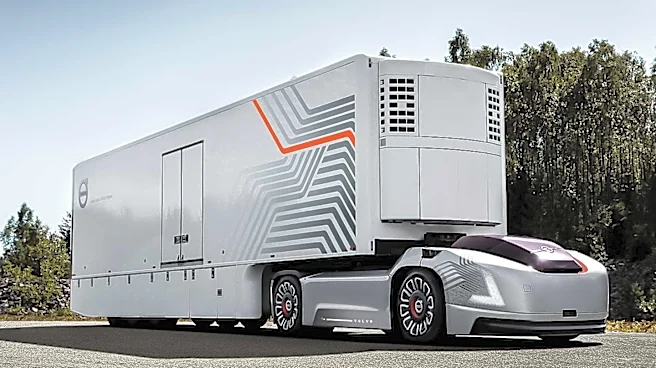
Aurora has introduced its second-generation driverless trucks, aiming to enhance its commercial autonomous freight network. The company plans to deploy these trucks across ten driverless routes in the U.S. Sun Belt, targeting an expansion in customer
service. The new fleet is based on the International LT Series truck and incorporates Aurora's next-generation hardware, designed for a lifespan of one million miles with improved computing capabilities. Aurora has completed its Safety Case process, allowing these trucks to operate on public roads without a human driver. By the end of June, Aurora's trucks had completed nearly 440,000 driverless miles. The company is also seeing increased commercial demand, with Hirschbach Motor Lines planning to purchase 500 of these trucks. Manufacturing partner Roush is integrating the new hardware into the trucks, with an annual production target of 1,000 units.
Why It's Important?
The launch of Aurora's second-generation driverless trucks marks a significant step in the evolution of autonomous freight transport. This development could lead to increased efficiency and reduced operational costs in the logistics industry. By eliminating the need for human drivers, companies can potentially lower labor costs and improve delivery times. The expansion of autonomous trucking routes in the U.S. Sun Belt could also stimulate economic activity in these regions. Additionally, the move reflects a growing trend towards automation in the transportation sector, which could have wide-ranging implications for employment and regulatory frameworks.
What's Next?
Aurora plans to debut the second-generation trucks during a livestream event on July 23. The company aims to scale up production and deployment, with a goal of putting hundreds of autonomous trucks on the road. This expansion could prompt responses from regulatory bodies concerning safety and operational standards for driverless vehicles. The logistics industry may also see increased competition as other companies develop similar technologies. Stakeholders, including logistics firms and policymakers, will likely monitor the performance and impact of these trucks closely.