









What's Happening?
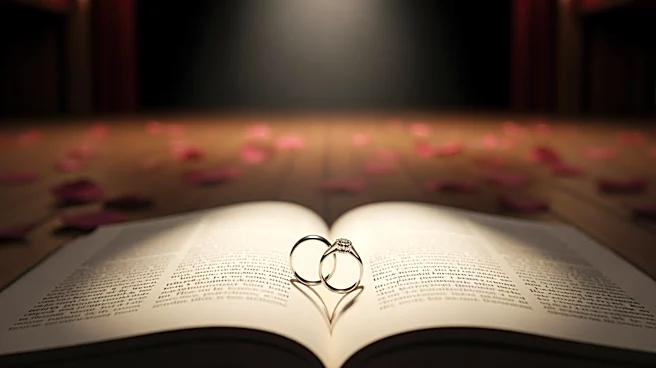
Oscar Diaz and Janelly Mendoza, a couple from Laredo, Texas, were married on stage at the Delacorte Theater in Central Park during a performance of Romeo and Juliet. The event was part of a unique initiative by the Public Theater, where real weddings
or vow renewals are held after each performance of the play this summer. Actor Francis Jue, who plays Friar Lawrence in the production, officiated the ceremony. The couple, who have known each other since childhood, were introduced to the idea by Saheem Ali, the associate artistic director of the Public Theater. Ali's production of Romeo and Juliet is set at the U.S.-Mexican border, reflecting the cultural and political tensions of the region. The initiative aims to provide a hopeful contrast to the tragic ending of Shakespeare's play by celebrating real-life unions.
Why It's Important?
This initiative by the Public Theater highlights the power of art to bring people together and create meaningful experiences. By incorporating real weddings into the performances, the theater not only enhances the audience's experience but also underscores themes of love and unity in a time of division. The project reflects a broader cultural effort to use public spaces and artistic platforms to foster community and dialogue. For the couples involved, it offers a unique and memorable way to celebrate their commitment, while for the audience, it provides a poignant reminder of the enduring power of love. This approach could inspire other cultural institutions to explore innovative ways to engage with their audiences and communities.
What's Next?
The Public Theater plans to continue hosting weddings and vow renewals after each performance of Romeo and Juliet throughout the summer, totaling 32 ceremonies. This initiative may prompt other theaters and cultural organizations to consider similar projects that blend performance with real-life events. The success of this program could lead to increased interest in theater as a space for community engagement and personal milestones. Additionally, the positive reception of these events might encourage further exploration of how art can intersect with and enhance everyday life, potentially influencing future programming and outreach efforts.