







What's Happening?
The U.S. Export-Import Bank (EXIM) has issued a non-binding indicative term sheet offering up to $6 billion in potential financing for a $51 billion Liquefied Natural Gas (LNG) project in Argentina. This initiative falls under the newly launched Andes-Atlantic
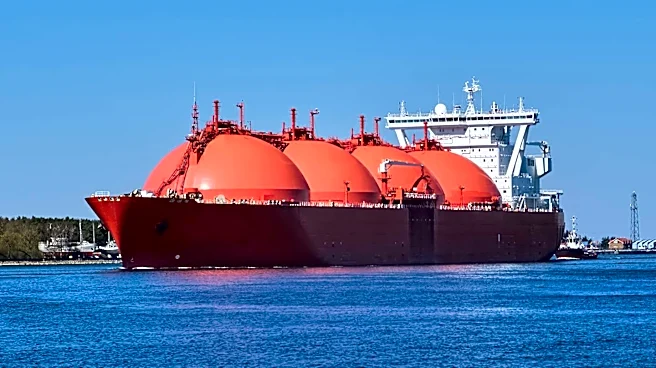
Corridor, a joint U.S.-Argentina program aimed at modernizing infrastructure across the region. The project, led by Argentina's YPF, Italy's Eni, and the Emirati firm XRG, seeks to monetize the Vaca Muerta shale gas reserves. The financing is specifically structured to support the procurement of U.S. goods and services for the project, which includes plans for two floating LNG units offshore Río Negro province with a combined export capacity of 13.2 million tons per year. Major contracts have already been awarded, including one to McDermott for engineering, procurement, construction, and commissioning work, and another to a consortium including Pumpco for the export pipeline system, though the latter is contingent on a final investment decision.
Why It's Important?
This significant financing offer underscores a broader U.S. strategy to deepen economic ties with Argentina and support American exporters. The $51 billion energy megaproject presents a substantial opportunity for U.S. companies to secure contracts for equipment, technology, and construction services, thereby boosting American competitiveness in the global energy sector. By backing such a large-scale project, EXIM helps U.S. firms compete for business that might otherwise go to international rivals. The Andes-Atlantic Corridor initiative itself highlights a strategic push by the U.S. to foster joint infrastructure development in South America, which can enhance regional stability and economic growth. For Argentina, the project is crucial for monetizing its vast Vaca Muerta shale gas reserves and establishing itself as a significant player in the global LNG market, potentially attracting further foreign investment through incentives like the Large Investment Incentive Regime (RIGI).
What's Next?
The project partners are targeting a final investment decision by the end of 2026. This decision is critical, as several key contracts, including the over $1 billion pipeline deal, are contingent upon it. The YPF-led consortium has applied to Argentina's RIGI investment incentive regime, which aims to provide legal and fiscal stability guarantees to attract large-scale foreign capital. The EXIM term sheet, along with the pipeline contract and the RIGI application, are all preparatory steps leading up to this final decision. If approved, the project will proceed with the development of a fully integrated value chain, from the Vaca Muerta wellheads through export pipelines and gas treatment facilities to floating LNG terminals for international export. The success of this project could pave the way for further U.S.-Argentina collaborations under the Andes-Atlantic Corridor.
Beyond the Headlines
The U.S. Export-Import Bank's involvement in Argentina's LNG project extends beyond mere financial backing; it represents a strategic alignment of U.S. trade policy with energy security and geopolitical interests. By facilitating U.S. exports and supporting American companies in large international projects, EXIM helps maintain the U.S.'s industrial base and technological leadership. This move also signals a commitment to diversifying global energy supplies and strengthening alliances in Latin America. The project's reliance on Argentina's RIGI framework highlights the importance of stable regulatory environments in attracting major foreign investments, potentially setting a precedent for future large-scale infrastructure developments in the region. The long-term implications include not only economic benefits for both nations but also a reinforcement of U.S. influence in a strategically important part of the world, balancing against other global powers vying for economic partnerships.