



What's Happening?
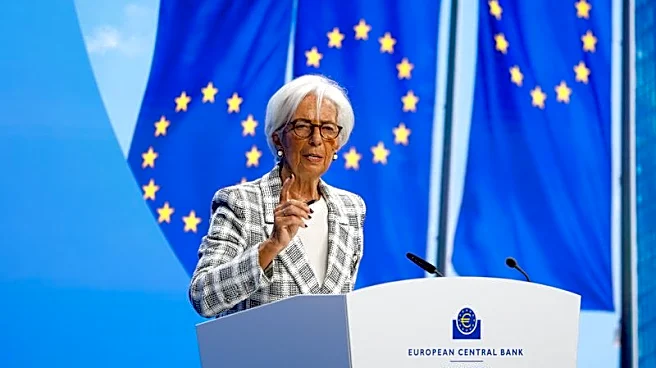
The European Central Bank (ECB) Governing Council, including Bulgarian National Bank Governor Dimitar Radev, will evaluate the necessity of additional monetary policy tightening in December. This assessment will be based on updated projections and incoming
economic data. Radev indicated that if data reveals more persistent inflationary pressures, the ECB must be prepared to raise interest rates again, though no pre-commitment to such a move has been made. The ECB previously increased its key interest rates by 25 basis points in September, subsequently leaving them unchanged in October, with the deposit facility rate at 2.5%. Disruptions to Black Sea trade are already impacting commodity prices, and a broader, more persistent price shock remains a risk. The ECB's objective is to return inflation to 2% over the medium term, and decisions will continue to be data-driven, considering factors like energy costs, wage settlements, inflation expectations, and the impact of tighter financing conditions on demand.
Why It's Important?
The ECB's decision on interest rates has significant implications for the global economy, including the U.S., due to interconnected financial markets and trade relationships. A further rate hike by the ECB could influence global capital flows, potentially strengthening the euro against the dollar, which could affect U.S. exports and the competitiveness of American businesses. For U.S. investors, changes in European interest rates can impact bond yields and investment strategies. If the ECB tightens monetary policy, it signals a continued global effort to combat inflation, which could influence the Federal Reserve's future decisions and market expectations in the U.S. The ongoing assessment of inflationary pressures, particularly those stemming from commodity price disruptions like those in the Black Sea, highlights the global nature of economic challenges and their potential to ripple through international supply chains, affecting U.S. consumers and businesses through import costs and market stability.
What's Next?
In December, the ECB Governing Council will convene to review updated economic projections and data, which will be crucial in determining the next steps for monetary policy. This includes assessing how higher energy costs are spreading across various prices, the persistence of wage settlements and inflation expectations, and the extent to which tighter financing conditions are curbing demand. The council will also consider the impact of the gradual reduction of the Eurosystem's monetary policy bond portfolios. While there is no pre-commitment to a specific interest rate path, the ECB remains prepared to tighten monetary policy further if evidence points to persistent inflation. Conversely, if price pressures narrow and previous tightening effects become more pronounced, this will also factor into the decision-making process. The outcome of this December assessment will set the tone for the ECB's approach to inflation control in the coming months.
Beyond the Headlines
The ECB's cautious stance, emphasizing data-driven decisions without pre-commitment, reflects a broader challenge faced by central banks globally: balancing inflation control with economic stability. The mention of Black Sea trade disruptions underscores the geopolitical risks that can directly translate into economic pressures, affecting commodity prices and supply chains far beyond the immediate region. This highlights the increasing complexity of monetary policy in an interconnected world, where external shocks can quickly alter domestic economic landscapes. Furthermore, the discussion of the impact of higher energy prices on businesses and households, and the varying transmission mechanisms of monetary policy across different euro area countries like Bulgaria, reveals the nuanced challenges in implementing a unified monetary policy. The ECB's actions, therefore, are not just about interest rates but also about managing expectations, maintaining confidence in the medium-term inflation target, and navigating a landscape of diverse national economic conditions and global uncertainties.