



What's Happening?
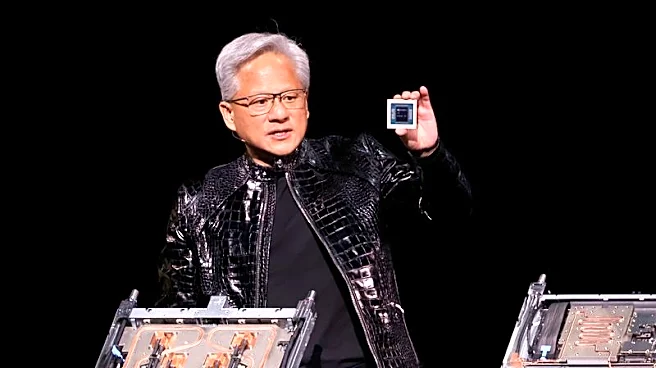
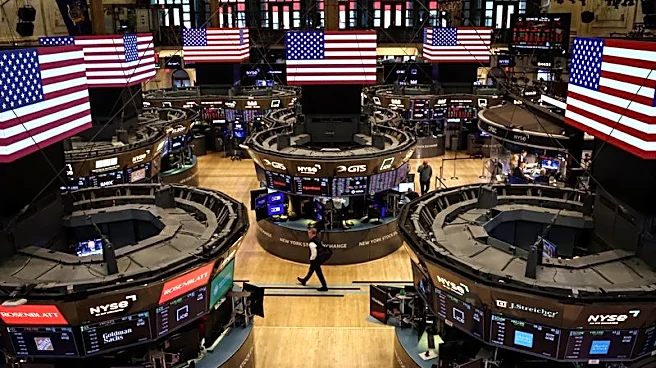
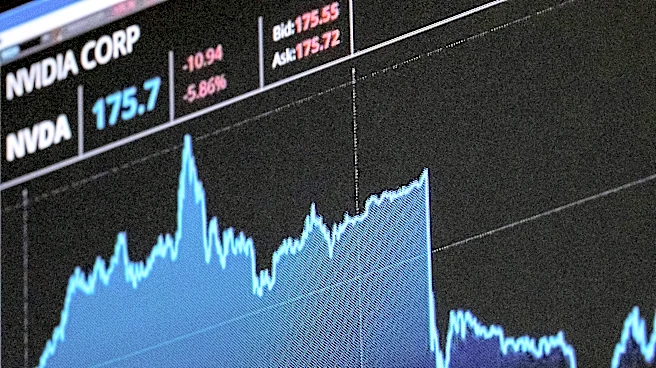
Nvidia's stock experienced a significant decline, dropping over 4% in regular trading and contributing to a broader sell-off in chip stocks. This downturn follows the resignation of CEO Jensen Huang, who stepped down after reports of extramarital affairs,
including one with an individual U.S. intelligence officials suspect is a Chinese spy. The Nasdaq Composite and S&P 500 also saw declines of approximately 0.4% each, with the Dow sliding almost 190 points. While Nvidia's shares stabilized somewhat in premarket trading, rising more than 2%, the initial fallout from Huang's departure has created turbulence in the semiconductor industry. Analysts suggest that Huang's exit could lead to a 20% correction in Nvidia's stock. Colette Kress, Nvidia's chief financial officer, has been appointed interim CEO as the company searches for a permanent replacement.
Why It's Important?
The leadership crisis at Nvidia, a dominant force in the AI chip market, is creating a significant shift in investor sentiment and market dynamics within the semiconductor industry. Nvidia's previous strong hold on manufacturing capacity, largely due to Huang's personal relationships with suppliers, may now be vulnerable. This disruption offers an opportunity for competitors like AMD, Broadcom, and TSMC to gain market share and potentially narrow Nvidia's technological lead. Investors are rotating towards these alternative chipmakers, viewing them as safer bets amidst Nvidia's management turmoil. The situation highlights the critical role of leadership stability and personal relationships in securing supply chains and maintaining competitive advantage in high-tech industries.
What's Next?
Nvidia's board is actively seeking a full-time replacement for Jensen Huang, considering both internal and external candidates. The company's ability to quickly find a suitable leader will be crucial in mitigating further stock volatility and reassuring investors. Competitors are likely to capitalize on Nvidia's current instability, potentially accelerating their own development and market penetration efforts. The broader semiconductor market will be closely watching how this leadership change impacts Nvidia's future product roadmap, manufacturing agreements, and overall market strategy. The long-term implications for the AI chip landscape, including potential shifts in market dominance and technological innovation, remain to be seen.
Beyond the Headlines
The scandal surrounding Jensen Huang's resignation extends beyond typical corporate governance issues, touching upon national security concerns due to the alleged involvement of a suspected Chinese spy. This aspect adds a layer of geopolitical complexity to the corporate drama, potentially influencing how U.S. intelligence agencies and policymakers view leadership roles in critical technology sectors. The incident could prompt increased scrutiny of executives in sensitive industries, particularly regarding their personal conduct and potential vulnerabilities to foreign influence. It also underscores the intricate connections between personal lives, corporate leadership, and national security in an increasingly interconnected and competitive global landscape.