






What's Happening?
H&M is strategically holding its prices steady in the United States, aiming to attract shoppers away from competitors like Zara and Shein, who are increasing their prices due to U.S. tariffs. According to H&M CEO Daniel Erver, these constantly changing
tariffs have created market turbulence, prompting H&M to plan for multiple scenarios. While other fast-fashion retailers are raising prices, H&M sees an opportunity to capture market share. Data from price tracking firm EDITED indicates that Zara's average U.S. prices for items like dresses, jeans, and shirts increased by 28% this month compared to a year ago, and were up in June compared to January. In contrast, H&M's U.S. prices have, on average, decreased by 3% year-on-year. Shein has also raised prices and experienced weaker customer growth following the end of the 'de minimis' duty-free treatment for low-value parcels. H&M's decision comes despite its CFO, Adam Karlsson, having previously stated in March that price hikes were likely to offset tariff impacts.
Why It's Important?
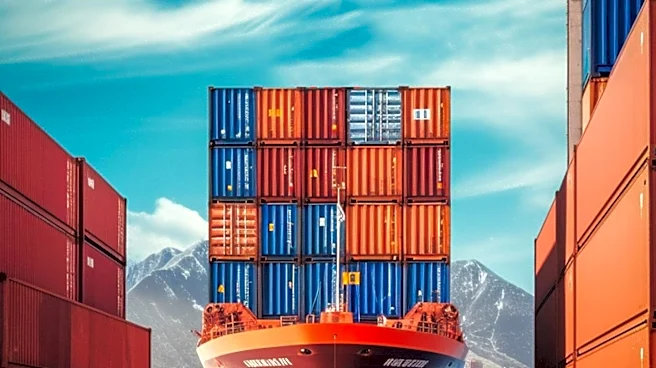
This pricing strategy by H&M carries significant implications for the U.S. fast-fashion market and consumer spending habits. By maintaining lower prices, H&M could potentially gain a competitive edge and increase its market share in the U.S., which is its second-largest market after Germany, accounting for 13% of its sales in 2024. This move could put pressure on other retailers to reconsider their pricing strategies, potentially leading to a price war or forcing them to absorb higher costs to remain competitive. For U.S. consumers, this means continued access to more affordable fashion options from H&M, while other brands become more expensive. The situation also highlights the broader impact of U.S. tariffs on the retail industry, particularly for companies that rely heavily on imports from China and other Asian countries. H&M's ability to mitigate tariff impacts by shifting production to countries like Bangladesh further underscores the global supply chain adjustments occurring in response to trade policies.
What's Next?
H&M plans to continue monitoring consumer sentiment and competitor actions in the U.S. market. The company is actively consolidating its supplier base to improve its supply chain efficiency and speed up the delivery of new styles to stores. This involves working with a smaller number of larger suppliers who operate factories in multiple countries, allowing H&M to shift production based on geopolitical situations and trade barriers. H&M aims to maintain production capacity below full utilization with its suppliers, enabling quick increases in output for popular items. Furthermore, H&M is pursuing a 'nearshoring' strategy, seeking to expand its supplier network in regions closer to major consumer hubs, such as Turkey, Egypt, Jordan, and Morocco for Europe. The company is also set to open its first stores in Brazil in the second half of the year, indicating further global expansion and supply chain diversification efforts.
Beyond the Headlines
H&M's strategy reflects a deeper trend of global retailers adapting to an increasingly complex and volatile international trade environment. The decision to absorb costs and maintain prices, even at the risk of impacting margins, demonstrates a long-term play for market dominance and customer loyalty in a price-sensitive sector. This approach could force a re-evaluation of traditional fast-fashion business models, which often prioritize rapid production and low costs, by highlighting the importance of supply chain resilience and strategic sourcing. The emphasis on 'nearshoring' and diversifying production away from regions heavily impacted by tariffs suggests a broader shift in global manufacturing, potentially leading to new economic opportunities in alternative production hubs. This also raises questions about the sustainability and ethical implications of such rapid supply chain adjustments, as companies seek to balance cost-efficiency with responsible sourcing practices.