



What's Happening?
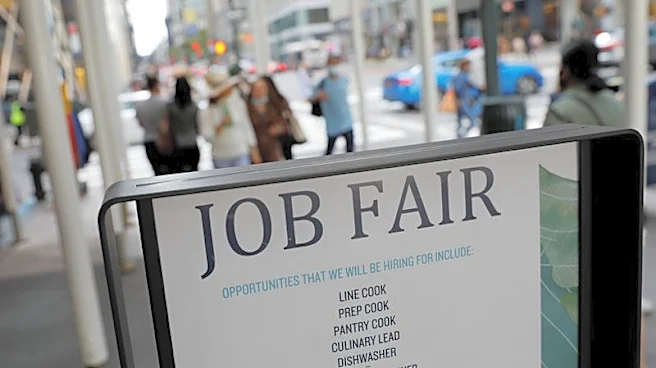
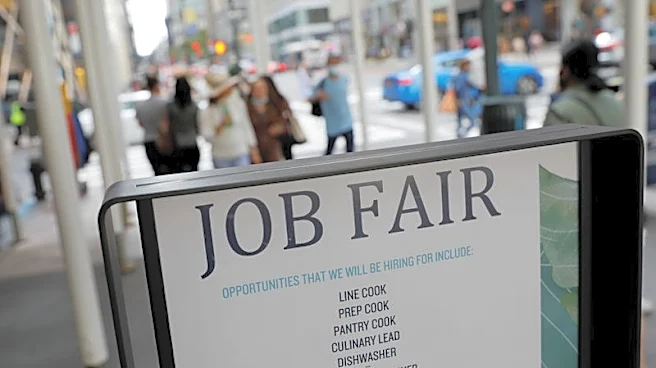
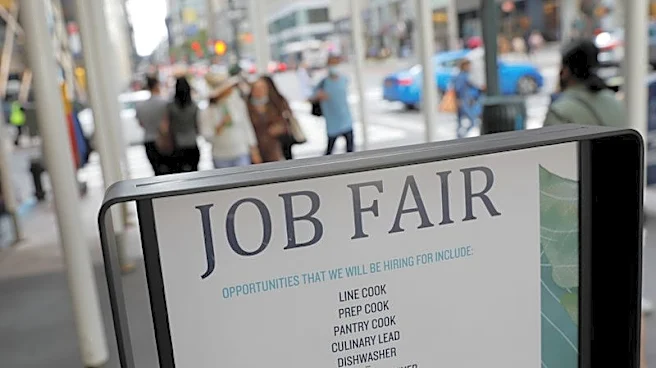
The U.S. economy experienced a loss of 23,000 jobs in July, according to the Bureau of Labor Statistics. This decline comes alongside revisions that reduced job gains from previous months by over 100,000. The report indicates a slowdown in both job growth
and wage increases, with average hourly earnings rising by only 3.2% annually, below the inflation rate of 3.5%. Economists express concerns over the weakening demand for labor, as companies show reluctance to hire, leading to fewer job opportunities and reduced bargaining power for workers.
Why It's Important?
The job losses and slowing wage growth signal potential challenges for the U.S. economy, affecting working families who may struggle with rising costs and limited income growth. The data suggests a shift in the labor market dynamics, with implications for economic policy and interest rates. The Federal Reserve may face less pressure to increase rates, but the overall economic stability could be at risk if job growth does not rebound. This situation highlights the need for strategic economic interventions to support job creation and wage improvements.
What's Next?
The labor market's future will depend on various factors, including economic policies and global economic conditions. Policymakers may need to consider measures to stimulate job growth and address wage stagnation. The Federal Reserve's decisions on interest rates will be closely watched, as they could influence economic recovery efforts. Additionally, sectors like healthcare continue to show employment growth, which may offer opportunities for job seekers in the coming months.