





What's Happening?
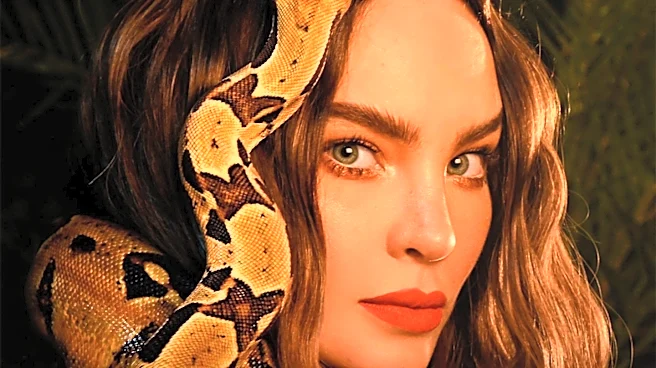
The Metropolitan Opera in New York has held auditions for a live snake to appear in its upcoming adaptation of Mozart's 'Così fan tutte.' A boa constrictor named Princess has been selected for the role, with a slightly smaller brown boa constrictor named Nala
serving as her understudy. The auditions were overseen by Zoe Ziegfeld, a carnival performer turned opera actor, who is cast as the snake handler in the production. Ziegfeld evaluated each snake's comfort level with people and their stage presence, noting that Princess's larger size and yellow-peach color made her a better visual fit for the stage. This adaptation of Mozart's 1790 opera is set in a 1950s Coney Island carnival, featuring vibrant scenery and sideshow performers. Ziegfeld, who has prior experience as a snake charmer at Coney Island, will be performing the role for the third time in this Met production.
Why It's Important?
The inclusion of live animals, particularly a boa constrictor, in a major Metropolitan Opera production highlights the creative and logistical complexities involved in bringing unique artistic visions to the stage. This decision adds an element of spectacle and realism to the Coney Island-themed 'Così fan tutte,' aiming to immerse the audience further into the carnival atmosphere. For the Met, it demonstrates a commitment to innovative staging and pushing the boundaries of traditional opera. The use of live animals also brings specific challenges related to animal welfare, safety, and training, requiring specialized handlers and careful coordination. This artistic choice could attract new audiences interested in the intersection of performance art and live animal acts, while also sparking discussions about the role of animals in theatrical productions. It underscores the Met's continuous effort to keep classical art forms fresh and engaging for contemporary audiences.
What's Next?
Princess, the chosen boa constrictor, will now proceed with rehearsals on a trial basis, focusing on her interaction with Zoe Ziegfeld and adapting to the stage environment. The production team will ensure the snake's comfort and safety, as well as the safety of the performers and audience. The Met will likely conduct further technical rehearsals to integrate Princess's movements seamlessly into the opera's staging and lighting. The success of these rehearsals will be crucial for her final appearance in the opera. The production will then open, showcasing Princess's debut on the Metropolitan Opera stage. The audience's reaction to the live snake performance will be a key indicator of the success of this creative decision, potentially influencing future productions that incorporate live animals.
Beyond the Headlines
The use of a live boa constrictor in a Metropolitan Opera production raises interesting questions about the evolving nature of performance art and the boundaries between different entertainment forms. Zoe Ziegfeld's background as a carnival performer bridging into opera highlights a fascinating cross-pollination of skills and aesthetics. This fusion challenges traditional notions of opera as a purely human-centric art form, introducing elements of spectacle often associated with circuses or sideshows. Ethically, the involvement of live animals in such high-profile productions always invites scrutiny regarding their welfare and the potential for stress. The Met's commitment to ensuring the animal's comfort and safety will be paramount. Culturally, this choice could be seen as an attempt to democratize opera, making it more accessible and intriguing to a broader audience by incorporating elements that resonate with popular entertainment. It also underscores the enduring human fascination with the exotic and the unexpected in live performance.