







What's Happening?
Anthropic, an artificial intelligence startup, has quietly set up a physical biology laboratory in the San Francisco Bay Area. This move signifies the company's expansion of its AI ambitions into the realm of drug science, moving beyond purely computational
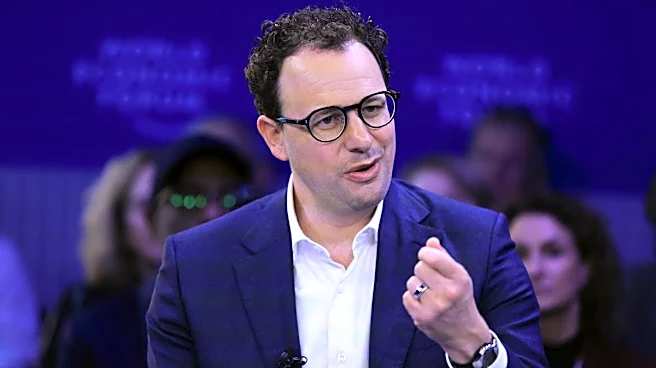
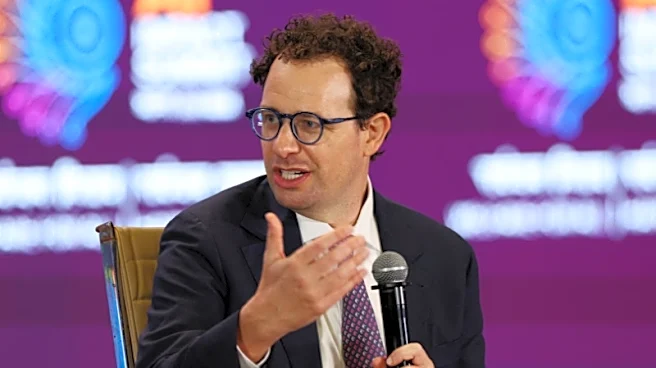
'in silico' evaluations. The head of life sciences at Anthropic, Eric Kauderer-Abrams, confirmed the existence of this 'wet lab,' emphasizing that real lab work remains crucial for biological research. While a spokesperson clarified that the lab is not specifically for drug discovery, the broader goal is to leverage AI to unlock treatments for rare diseases, an area that the pharmaceutical industry is perceived to be neglecting. This development comes at a time when public concerns about AI's potential impact, including job displacement and existential risks, are prevalent. Anthropic's CEO, Dario Amodei, has a personal motivation for this endeavor, having lost his father to a disease shortly before a cure became available. The company views life sciences as the most significant opportunity for AI to benefit the world.
Why It's Important?
This initiative by Anthropic is important because it represents a significant step in integrating artificial intelligence with physical biological research, potentially accelerating drug discovery and development. By establishing a 'wet lab,' Anthropic is committing to the practical, experimental validation of AI-driven hypotheses, which could bridge the gap between theoretical AI models and tangible medical breakthroughs. This approach could particularly benefit the development of treatments for rare diseases, which often receive less attention and funding from traditional pharmaceutical companies due to smaller market sizes. If successful, Anthropic's model could disrupt the conventional drug development pipeline, making it more efficient and cost-effective. However, the success of any drug program is inherently uncertain, as most drugs fail during clinical trials. The venture also highlights the growing trend of AI companies moving into highly regulated and complex fields like healthcare, raising questions about the ethical implications and societal impact of such powerful technologies.
What's Next?
Anthropic's immediate next steps will likely involve further development and scaling of its biology lab operations. The company will continue to integrate its AI capabilities with experimental biology, aiming to automate lab work to accelerate various processes. This will involve ongoing research and development to identify and validate potential drug candidates, particularly for rare diseases. Given the long and complex nature of drug development, Anthropic will need to navigate rigorous testing, clinical trials, and regulatory approvals. The company may also seek collaborations with external partners, as indicated by Kauderer-Abrams, to leverage specialized expertise and resources in the biotech sector. Public and scientific scrutiny will likely intensify as Anthropic's AI drug program progresses, especially concerning the ethical considerations of AI in biology and the potential for misuse, such as in biological weapons development, which some of Anthropic's own researchers have warned about.
Beyond the Headlines
Beyond the immediate goal of drug development, Anthropic's venture into physical biology labs carries deeper implications for the future of scientific research and the role of AI. This move challenges the traditional boundaries between computational and experimental science, suggesting a future where AI is not just a tool for analysis but an integral part of the experimental process itself. The ethical dimension is particularly salient; as AI becomes more deeply embedded in biological research, questions about accountability, the potential for unintended consequences, and the responsible development of powerful technologies will become increasingly critical. The company's focus on rare diseases also highlights a potential shift in how medical research priorities are set, driven by AI's ability to identify and address overlooked areas. This could lead to a more equitable distribution of research efforts, but it also necessitates robust ethical frameworks to ensure that AI-driven biological advancements are used solely for beneficial purposes and do not exacerbate existing societal inequalities.