








What's Happening?
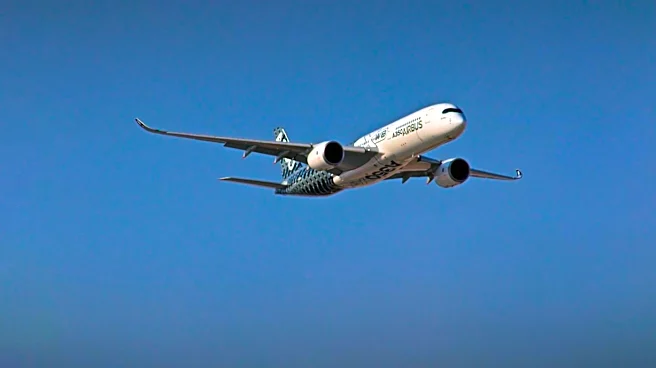
A recent review of Philippine Airlines' Airbus A350-1000 business class on the Manila to San Francisco route highlighted several aspects of the service. The hard product, specifically the Collins Aerospace Elevation seats, was praised for its comfort,
spaciousness, privacy, and technology. The cabin design and amenities like plush pillows, cozy blankets, and mattress pads were also noted positively. However, the soft product received mixed feedback. The Viasat Wi-Fi was non-functional for the entire flight, and the promised cappuccino service was unavailable. The crew's service was described as lacking warmth and attentiveness compared to previous experiences, with interactions feeling rushed and less hospitable. Food quality was deemed acceptable but not exceptional, with Filipino options being a highlight. The ground experience at Manila Airport was also criticized as unpleasant.
Why It's Important?
This review is important for U.S. travelers considering Philippine Airlines for trans-Pacific flights, particularly those seeking a premium experience. While the physical comfort of the business class seats is a significant draw, the inconsistencies in service quality and the lack of essential amenities like reliable Wi-Fi can impact overall passenger satisfaction. For Philippine Airlines, these observations highlight areas for improvement to compete effectively with other carriers on long-haul routes to the U.S. The feedback on crew attentiveness and the availability of advertised services directly affects the airline's brand perception and its ability to attract and retain premium customers. The issues with Wi-Fi and ground experience at Manila Airport also point to broader operational challenges that could deter business travelers and those prioritizing seamless connectivity.
What's Next?
Philippine Airlines will likely need to address the reported issues to enhance its business class offering. This includes resolving the persistent Wi-Fi problems on its A350 fleet and ensuring that advertised services, such as cappuccino availability, are consistently met. Training and service quality initiatives for cabin crew could also be implemented to foster a more consistent and hospitable experience. Improving the ground experience at Manila Airport, while potentially a larger infrastructure challenge, would also contribute to overall passenger satisfaction. For travelers, it means they should monitor future reviews and airline announcements regarding these improvements. The airline's response to such feedback will be crucial in determining its competitive standing in the lucrative trans-Pacific market.
Beyond the Headlines
Beyond the immediate service issues, this review touches upon the broader challenge for airlines in balancing a strong hard product with an equally compelling soft product. In the competitive premium travel market, passengers expect not only comfortable seating but also impeccable service, reliable technology, and consistent amenities. The discrepancy between the excellent seats and the inconsistent service on Philippine Airlines' A350 suggests a potential gap in operational execution or crew training. This highlights the importance of a holistic approach to customer experience, where every touchpoint, from ground services to in-flight amenities and crew interaction, contributes to the overall perception of luxury and value. Airlines that fail to deliver on all fronts risk losing premium customers to competitors who offer a more seamless and consistently high-quality journey.