






What's Happening?
Younger consumers, including Millennials and Gen Z, are fundamentally altering the automotive industry by approaching car purchases with expectations similar to those they have for smartphones. This demographic prioritizes software capabilities, digital
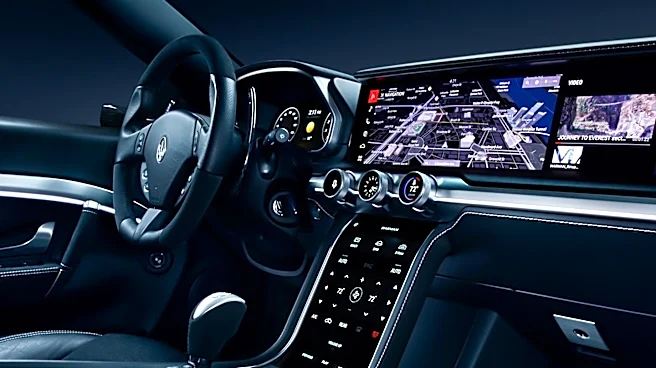
integration, and advanced infotainment systems over traditional factors like brand prestige and mechanical engineering. They expect seamless digital experiences, including instant syncing of personal settings and music playlists, and scrutinize multimedia systems for input lag and user interface quality. This shift is driven by the aggressive expansion of electric vehicles and the entry of tech companies into the car market, transforming vehicles into 'rolling computers.' Younger consumers also favor online platforms and social media for research, relying on user-generated content and digital reviews rather than traditional dealerships.
Why It's Important?
This paradigm shift has profound implications for U.S. automakers and the broader transportation sector. Legacy car manufacturers, traditionally focused on hardware, are struggling to adapt to the demand for software-driven systems, risking market share to tech-focused competitors. The emphasis on shared mobility programs like Uber and Grab among younger demographics also challenges the traditional model of private vehicle ownership, potentially impacting car sales and urban planning. Furthermore, concerns about data security in connected cars are becoming a primary psychological barrier to adoption, forcing manufacturers to prioritize robust data handling practices. The industry must now balance advanced digital features with safety, as complex touchscreen interfaces can lead to cognitive overload and increased accident risks, prompting regulatory and design pushbacks.
What's Next?
The automotive industry is expected to continue its digital transformation, with manufacturers increasingly investing in software development and user experience design to meet younger consumers' demands. This will likely lead to more partnerships between traditional automakers and tech companies. We may see a hybrid design approach emerging, where essential functions retain tactile controls while digital interfaces handle entertainment and personalization. Regulatory bodies will likely increase scrutiny on in-car digital interfaces to ensure driver safety, potentially leading to new standards for user interface design. The growth of shared mobility services will also continue, prompting cities and transportation providers to adapt infrastructure and services. Automakers that successfully integrate digital connectivity with uncompromising safety standards will likely emerge as leaders in this evolving market.
Beyond the Headlines
The shift in how younger consumers view cars reflects a broader cultural trend where technology is deeply integrated into every aspect of life. The car is no longer just a mode of transport but an extension of one's digital ecosystem. This has ethical implications regarding data privacy and security, as vehicles collect vast amounts of personal data. The tension between digital convenience and physical safety also highlights a critical design challenge in an increasingly connected world. This generational change could also accelerate the adoption of autonomous vehicles, as younger consumers are already comfortable with technology mediating their experiences. Ultimately, the automotive industry's evolution mirrors a larger societal movement towards digital-first experiences and a re-evaluation of traditional ownership models.