




What's Happening?
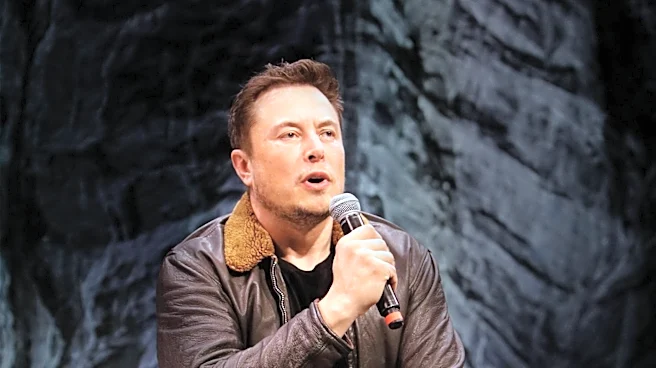
Jack Dorsey, co-founder of Twitter, publicly advocated for the abolition of all intellectual property (IP) laws in April 2025, a stance that was echoed by Elon Musk, who responded with 'I agree' on the social media platform X. Dorsey's statement, which
used the broad term 'IP law,' encompasses rights over songs, novels, manufacturing patents, and product trademarks. This proposal sparked immediate debate, particularly among creators. Ed Newton-Rex, a British musician and founder of Fairly Trained, expressed concern that such a move would allow others to exploit creators' work for profit without permission. Dorsey, however, argued that the current system stifles creativity and unfairly distributes payments, leaving too much in the hands of intermediaries. He did not specify any particular laws but focused on the financial distribution to creators.
Why It's Important?
The call to abolish intellectual property laws by prominent tech figures like Jack Dorsey and Elon Musk carries significant implications for various U.S. industries, particularly those reliant on creative works and innovation. If implemented, such a change could fundamentally alter how artists, musicians, writers, and inventors are compensated for their creations, potentially leading to a drastic shift in revenue streams and creative incentives. Industries like entertainment, software development, and manufacturing, which heavily depend on patents, copyrights, and trademarks for protection and monetization, could face widespread disruption. Creators might lose the ability to control how their work is reproduced, distributed, or adapted, impacting their livelihoods and potentially discouraging future innovation. Conversely, proponents might argue it could foster a more open and collaborative environment, accelerating technological advancements and cultural exchange by removing barriers to access and use.
What's Next?
The debate surrounding the abolition of intellectual property laws is likely to intensify, drawing reactions from various stakeholders including legal experts, creator communities, and technology companies. While Dorsey and Musk's statements are currently proposals, they could influence public discourse and potentially lead to discussions about reforms or alternative models for compensating creators and innovators. The legal precedent set by cases like the German court ruling in November 2025, which sided with the GEMA management entity against OpenAI regarding song lyrics reproduced by ChatGPT, highlights the ongoing challenges in balancing creator rights with technological advancements. Future developments may involve legislative efforts to adapt IP laws to the digital age, or the emergence of new licensing models, such as the agreement between Disney and OpenAI, which allow for controlled use of intellectual property.
Beyond the Headlines
The discussion initiated by Jack Dorsey delves into deeper ethical and economic questions about the nature of ownership in the digital age and the role of intermediaries in creative industries. The core tension lies between the traditional concept of individual ownership and the potential for broader societal benefit through unrestricted access and use of information and creative works. Abolishing IP laws could lead to a re-evaluation of how value is created and distributed, potentially shifting power dynamics from rights holders to platforms or consumers. It also raises questions about the long-term sustainability of creative professions if creators cannot secure exclusive rights to their work. This debate could trigger a fundamental re-thinking of economic models that support innovation and artistic expression, potentially leading to new frameworks for compensation and collaboration that are better suited to a globally interconnected and digitally driven economy.