









What's Happening?
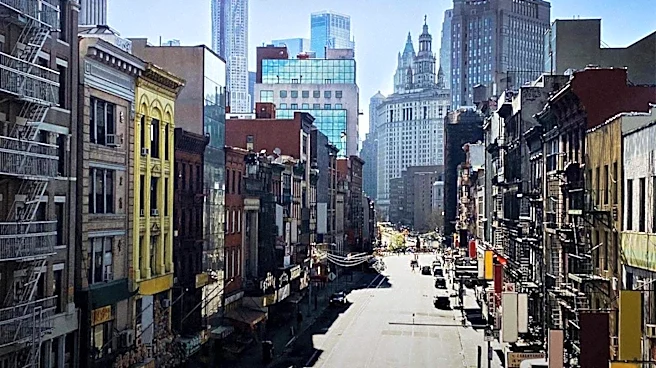
Colson Whitehead's latest novel, 'Cool Machine,' marks the final installment of his Harlem Trilogy. Set in the 1980s, the book captures the essence of New York City during a time of cultural and economic transformation. The story follows Ray Carney, a furniture
store owner and part-time fence, navigating the complexities of a city marked by hip-hop, graffiti, and a growing divide between rich and poor. Whitehead's narrative explores themes of cultural appropriation, class, and race, weaving a tale that is both entertaining and thought-provoking. The novel reflects on the city's history and its impact on the lives of its diverse inhabitants.
Why It's Important?
The release of 'Cool Machine' is significant as it completes Colson Whitehead's acclaimed Harlem Trilogy, offering readers a comprehensive look at New York City's evolution over several decades. The novel's exploration of cultural and social issues resonates with contemporary discussions about race, class, and identity. Whitehead's work is known for its ability to blend historical context with engaging storytelling, making it both a literary and cultural milestone. The book's themes of economic disparity and cultural exchange are particularly relevant in today's society, providing readers with insights into the ongoing challenges and dynamics of urban life.