






What's Happening?
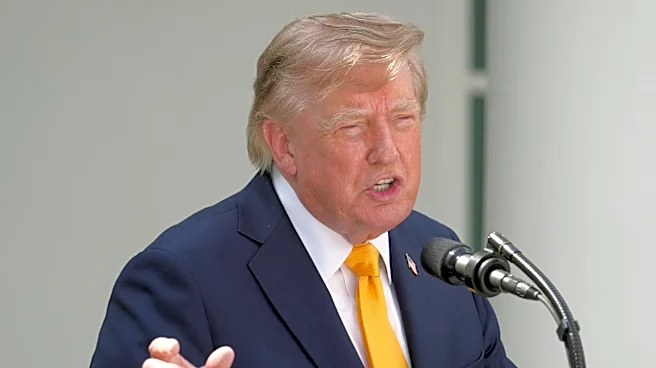
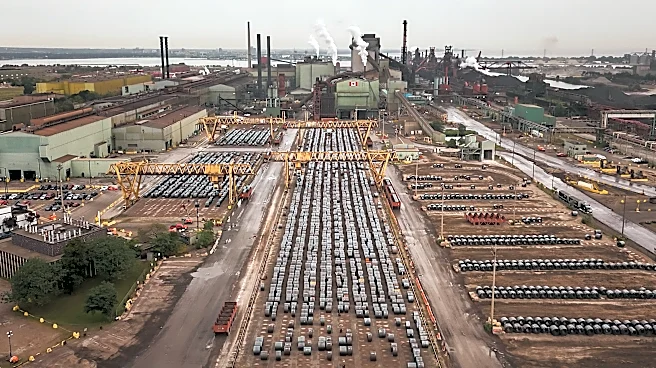
President Trump announced on Monday, August 24, 2026, via social media, that he will impose new 50% tariffs on Canadian-made cars, auto parts, and steel starting in January 2027. This decision follows the breakdown of trade negotiations between the U.S.
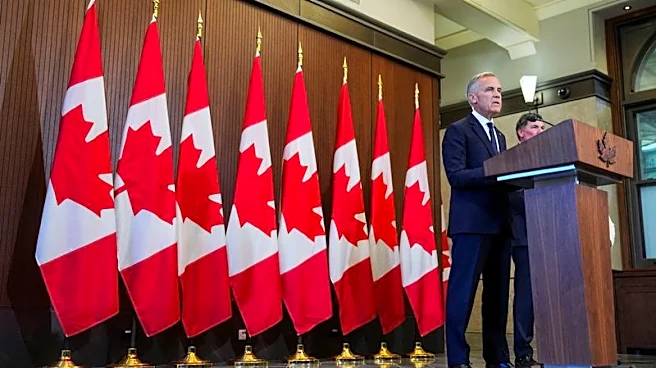
and Canada over the weekend, which saw a fresh round of 25% U.S. tariffs on some Canadian goods take effect on Saturday. Canadian Prime Minister Mark Carney stated that talks failed because American negotiators made unfavorable requests, and he vowed that Canada would retaliate with its own levies. President Trump criticized Canada, stating, 'They feel entitled, and yet, WE DON’T NEED CANADA, THEY NEED US!' The new tariffs will double the existing 25% rate and apply to approximately $28 billion worth of Canadian goods, according to Prime Minister Carney.
Why It's Important?
This escalation of the trade war between the U.S. and Canada carries significant economic implications for both nations. The imposition of 50% tariffs on Canadian cars, auto parts, and steel could severely disrupt supply chains, increase manufacturing costs, and potentially lead to higher prices for consumers in the U.S. The automotive industry, which is highly integrated across the U.S.-Canada border, stands to be particularly affected, potentially leading to job losses and reduced competitiveness. Canada's promised retaliation with its own tariffs will further exacerbate the situation, creating a cycle of protectionist measures that could harm businesses and consumers on both sides. Given that Canada is the second-largest export trading partner for the U.S., accounting for 14% of all U.S. exports in the first half of 2026, these tariffs could have a substantial negative impact on the U.S. economy.
What's Next?
The announced tariffs are set to take effect in January 2027, providing a window for potential diplomatic efforts or further retaliatory measures. Canadian Prime Minister Mark Carney has indicated that Canada will match the U.S. 'dollar for dollar' with its own retaliatory tariffs, with more details expected to be revealed. Businesses in both countries, particularly those in the automotive and steel sectors, will need to prepare for the increased costs and potential market disruptions. The delay in implementation until January 2027 might offer a slim chance for renewed negotiations, though President Trump's strong rhetoric suggests a firm stance. The situation will likely lead to increased lobbying efforts from affected industries and could become a significant issue in future political discussions regarding trade policy.
Beyond the Headlines
The escalating trade dispute between the U.S. and Canada reflects a broader shift in global trade dynamics, where protectionist policies are increasingly being used as leverage in international relations. President Trump's approach, characterized by aggressive tariff imposition and strong nationalistic rhetoric, challenges traditional multilateral trade agreements and alliances. This situation highlights the vulnerability of deeply integrated economies to political decisions and the potential for trade wars to undermine long-standing economic partnerships. Beyond the immediate economic impact, such disputes can strain diplomatic relations, foster uncertainty for businesses, and ultimately affect consumer confidence. The use of economic integration as a 'weapon,' as described by Prime Minister Carney, points to a more confrontational era in international trade, where economic policy is intertwined with geopolitical strategy.