









What's Happening?
The United States, despite having one of the largest natural gas reserves globally, has not fully utilized natural gas as a transportation fuel on a national scale. The most practical application for natural gas lies in work trucks, commercial fleets,
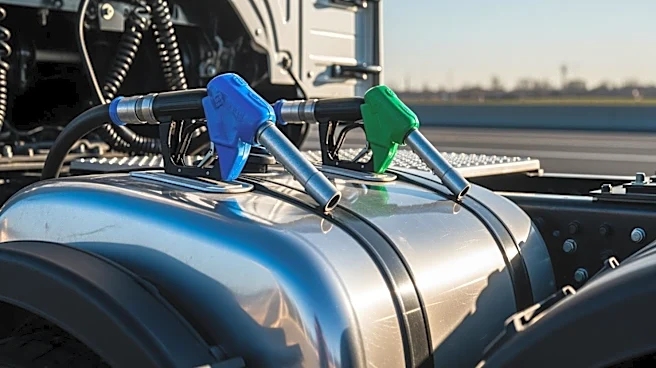
and heavy-duty vehicles where fuel consumption is high and routes are predictable. A dual-fuel system, such as one based on the Ford F-150 platform, could use compressed natural gas as the primary fuel with gasoline as a backup. This system addresses the challenge of a sparse fueling network by allowing vehicles to switch between fuels without altering driver behavior. However, despite the technical feasibility and economic benefits, a coordinated national strategy has not been implemented. Past efforts, like those proposed by T. Boone Pickens, failed due to economic disruptions and lack of policy framework, leaving natural gas transportation initiatives fragmented and localized.
Why It's Important?
The underutilization of natural gas in transportation represents a missed opportunity for the U.S. to leverage its domestic energy resources, potentially reducing reliance on imported oil and enhancing energy resilience. A dual-fuel system could offer significant economic advantages, particularly in heavy-duty and high-utilization contexts, by reducing fuel costs and extending vehicle range without requiring extensive infrastructure changes. The lack of a coordinated policy has left natural gas confined to niche applications, unlike the more unified approach seen with electric vehicles. A strategic alignment of energy sources, utilizing natural gas where most effective, could improve efficiency and reduce costs across the transportation sector.
What's Next?
For natural gas to become a more integral part of U.S. transportation, a shift from isolated incentives to a structured, national strategy is necessary. This would involve targeted infrastructure investments along major freight routes and logistics hubs, aligning with vehicle utilization patterns. Such a strategy could complement ongoing electrification efforts, creating a diversified energy framework that maximizes the strengths of both natural gas and electric vehicles. The decision to pursue this path would require coordinated policy execution and industry alignment to fully leverage the country's natural gas advantages.
Beyond the Headlines
The broader implications of adopting natural gas in transportation include potential geopolitical benefits by reducing oil imports and enhancing national energy security. Additionally, the environmental impact of natural gas, which burns cleaner than diesel, could contribute to emission reduction goals. However, the transition would require overcoming existing policy and infrastructure challenges, necessitating a reevaluation of current energy strategies to incorporate natural gas as a viable alternative fuel source.