






What's Happening?
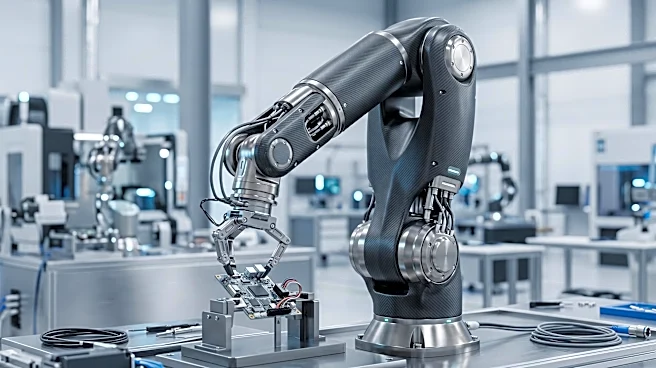
Nidus Technologies, a company focused on bringing physical AI to defense tech factory floors, has successfully raised $30 million in combined pre-seed and seed funding rounds. The funding was led by Costanoa for the pre-seed round and Kleiner Perkins
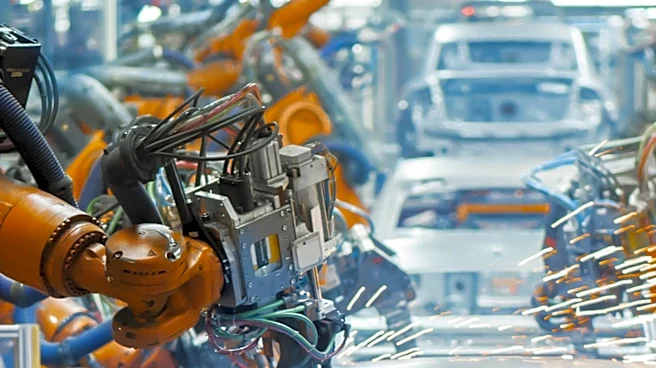
for the seed round. Nidus Technologies aims to enhance existing robots with 'embodied intelligence' to perform precision assembly tasks within the defense sector. The company was founded by four individuals who previously worked together at the defense tech startup Vannevar. This capital injection is earmarked for hiring new talent and scaling the deployment of their technology.
Why It's Important?
This funding for Nidus Technologies highlights a significant investment trend in the defense sector, particularly in the application of physical AI and automation. The development of embodied intelligence for precision assembly tasks can lead to increased efficiency, accuracy, and potentially reduced human risk in manufacturing processes critical for national defense. For the U.S., this could mean a more robust and self-reliant defense industrial base, less susceptible to supply chain disruptions and labor shortages. The focus on defense tech factory floors suggests a strategic move to modernize manufacturing capabilities, which could have long-term implications for military readiness and technological superiority. Companies like Nidus Technologies are at the forefront of integrating advanced AI into physical production, potentially setting new standards for industrial automation in high-stakes environments.
What's Next?
With the newly secured $30 million, Nidus Technologies plans to expand its workforce and scale the deployment of its physical AI solutions. This expansion will likely involve recruiting engineers, AI specialists, and operational staff to further develop and implement their embodied intelligence technology. The scaling of deployment suggests that Nidus Technologies will be working to integrate its systems into more defense tech factory floors, potentially leading to partnerships with major defense contractors. Success in these initial deployments could attract further investment and accelerate the adoption of physical AI across the broader manufacturing sector, particularly in areas requiring high precision and reliability. The company's progress will be closely watched as a bellwether for the integration of advanced robotics in critical national industries.
Beyond the Headlines
The investment in Nidus Technologies underscores a broader strategic shift towards integrating advanced AI and robotics into critical national infrastructure, particularly defense. This move raises important questions about the future of labor in manufacturing, the ethical implications of autonomous systems in defense, and the potential for increased technological competition among nations. The development of 'embodied intelligence' could lead to highly specialized and efficient manufacturing processes, but it also necessitates robust cybersecurity measures to protect these advanced systems from potential threats. Furthermore, the reliance on AI for precision tasks could redefine skill requirements for the workforce, emphasizing the need for training in AI management and maintenance rather than manual assembly. This trend could also spur innovation in related fields, such as sensor technology and data processing, as the demand for more sophisticated physical AI solutions grows.