





What's Happening?
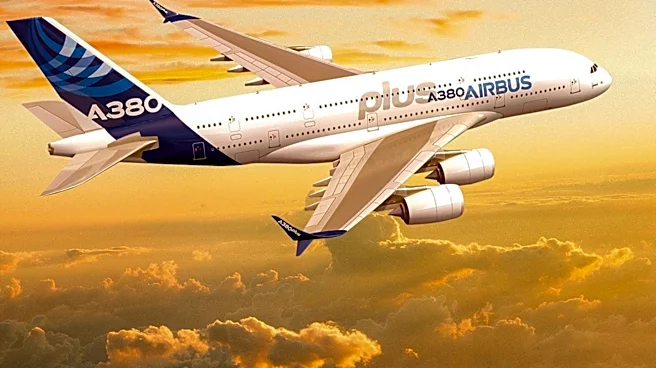
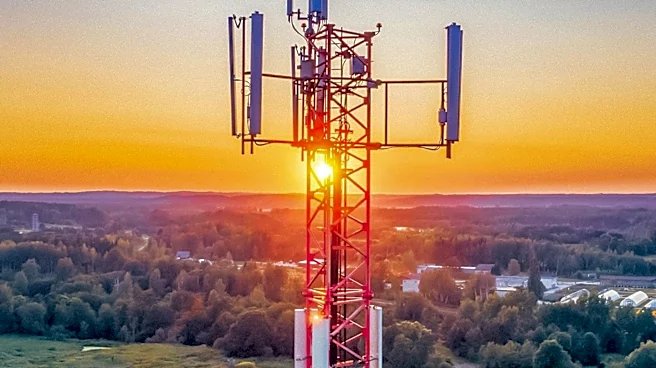
The U.S. government has established a rebate program, estimated between $3.83 billion and $5.71 billion, to help airlines retrofit their aircraft with new radio altimeters to accommodate the new 5G wireless spectrum. This upgrade is mandated for all airlines operating
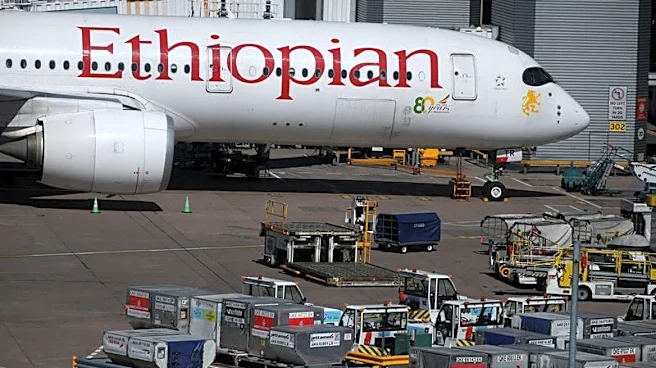
in the contiguous 48 states and Washington, D.C., with U.S. scheduled airlines and large foreign airlines serving the U.S. required to comply by December 30, 2030. However, the program explicitly excludes foreign carriers from receiving any of these funds. Foreign airlines, such as British Airways, Lufthansa, Air Canada, Emirates, and Singapore Airlines, must absorb the full cost of these mandatory upgrades, which the FAA estimates will cost foreign operators between $962 million and $1.44 billion. The Federal Communications Commission (FCC) justified this exclusion by stating that rebates for foreign aircraft would not be in the public interest due to the 'fluid and itinerant nature' of their U.S. operations.
Why It's Important?
This decision has significant implications for international aviation and trade relations. The exclusion of foreign carriers from the rebate program creates an uneven playing field, forcing them to bear substantial costs that their U.S. counterparts are subsidized for. This could lead to increased operational costs for foreign airlines, potentially impacting ticket prices for consumers and the competitiveness of international routes to and from the U.S. The International Air Transport Association (IATA) has filed a legal challenge, arguing that the exclusion is arbitrary and capricious, fails to prevent harmful radio interference, and conflicts with U.S. Open Skies treaty commitments that promise fair and equal competition. The situation highlights a perceived hypocrisy, as U.S. airlines, including Delta, previously lobbied against foreign subsidies for international competitors while now benefiting from government support themselves.
What's Next?
The legal challenge brought by the International Air Transport Association (IATA) against the Federal Communications Commission (FCC) will be a critical next step. IATA's arguments, particularly concerning the arbitrary nature of the exclusion and potential conflicts with Open Skies agreements, could lead to a reconsideration of the FCC's rule. If IATA wins, the FCC may be compelled to revise its policy to either provide a more reasoned basis for the exclusion or implement a usage-based formula for rebates. Regardless of the legal outcome, foreign airlines will need to proceed with the mandated altimeter upgrades by the December 30, 2030 deadline, incurring significant costs. This situation could also prompt further discussions and potential disputes regarding international trade practices and the interpretation of 'fair competition' in the global aviation industry.
Beyond the Headlines
This issue extends beyond immediate financial implications, touching upon the broader principles of international trade, sovereignty, and the interpretation of bilateral agreements. The U.S. government's decision to subsidize its domestic industry while imposing costs on foreign competitors, despite previous U.S. airline complaints about foreign subsidies, raises questions about consistency in policy and the application of 'level playing field' rhetoric. It underscores the complex interplay between national economic interests, regulatory mandates, and international diplomatic relations. The outcome of IATA's legal challenge could set a precedent for how governments manage technological transitions that impact global industries, potentially influencing future policies on cross-border infrastructure upgrades and the treatment of foreign entities operating within national jurisdictions. It also highlights the ongoing tension between national protectionism and the ideals of open markets and fair competition in a globalized economy.