

What's Happening?
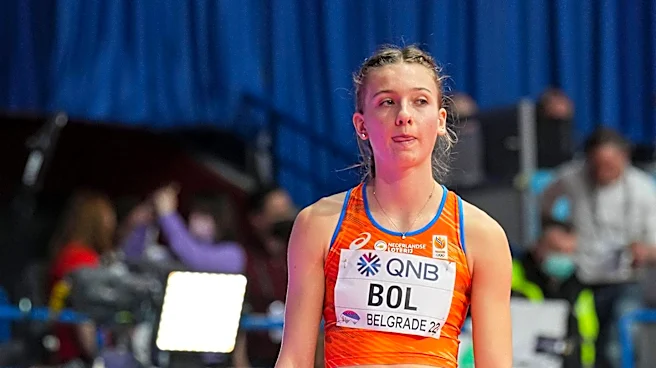
Dutch track and field athlete Femke Bol has successfully transitioned from the 400m hurdles to the 800m event, achieving significant results in her first season. Under the guidance of her coach, Laurent Meuwly, Bol ran a national record of 1:54.71 in the 800m,
placing her within the top 10 on the all-time list. Meuwly, who is the head coach for sprints, hurdles, and relays at the Dutch Olympic Training Centre, had been planning this move for Bol since they began working together. He initially convinced her to postpone the switch to the 800m for a year to secure a second world title in the 400m hurdles. This strategic decision allowed Bol to conclude her 400m hurdles chapter on a high note before embarking on the new challenge of the 800m. Meuwly's coaching approach involved adapting her training, maintaining her mileage around 60 kilometers per week, and preparing her for the mental adjustments required for the longer distance.
Why It's Important?
This transition highlights the evolving strategies in elite track and field, where athletes and coaches are increasingly exploring new distances to maximize performance and extend careers. Bol's success in the 800m, a distance she is relatively new to, demonstrates the effectiveness of tailored coaching and athlete development programs. Her achievement of a national record and a top-10 all-time ranking in her debut season for the 800m could inspire other athletes to consider similar strategic shifts. For the sport, it adds another formidable competitor to the 800m field, potentially elevating the level of competition and pushing boundaries for world records. The focus on mental adjustment and specific training modifications by Coach Meuwly also provides valuable insights into high-performance athletic preparation, which could influence coaching methodologies across various disciplines. This development underscores the importance of long-term athlete planning and the courage to venture into new competitive territories.
What's Next?
Following her impressive debut in the 800m, the immediate focus for Femke Bol and Coach Meuwly will likely be on refining her technique and strategy for this new distance. Given her rapid success, it is probable that she will continue to compete in the 800m, potentially aiming for further improvements in her national record and challenging for international medals. The conversation around the 800m world record is expected to shift towards times around 1:52, indicating the high expectations for athletes like Bol. Her participation in upcoming major championships will be closely watched to see if she can maintain her performance level and establish herself as a dominant force in the 800m, similar to her success in the 400m hurdles. The strategic planning by her coach suggests a methodical approach to her career, implying that future decisions will be carefully considered to optimize her athletic potential.
Beyond the Headlines
Femke Bol's successful transition to the 800m goes beyond mere athletic achievement; it represents a significant case study in sports science and athlete management. The decision to move up in distance, especially after achieving considerable success in a shorter event, challenges conventional wisdom that often encourages athletes to specialize early. This move highlights the importance of a holistic coaching philosophy that considers an athlete's long-term potential and physical capabilities rather than strictly adhering to initial specializations. It also underscores the mental fortitude required to adapt to new challenges and the trust between an athlete and their coach. Bol's journey could influence how talent is identified and nurtured in track and field, promoting a more flexible and adaptive approach to athlete development. Her story also contributes to the broader narrative of women's athletics, showcasing the increasing versatility and competitive depth in the sport.