







What's Happening?
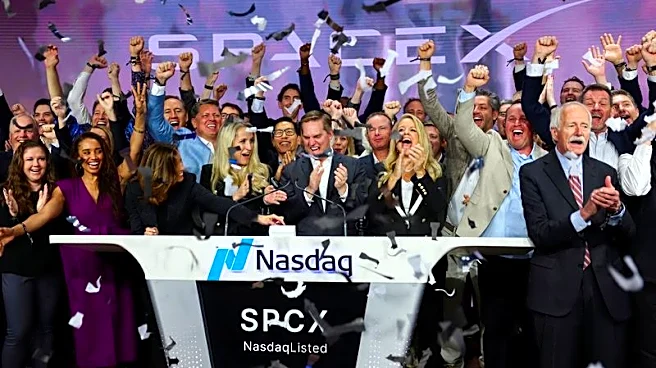
SpaceX shares experienced a significant increase on their second day of trading, following a successful initial public offering (IPO). The stock rose by 20%, building on a 19% gain from the previous day, which added $412 billion to its market value. This
surge brought the share price to $192.46, a 42% increase from the IPO price of $135. As a result, SpaceX's market capitalization exceeded $2.5 trillion, placing it among the top six largest companies globally. The IPO included an over-allotment option, allowing underwriters to sell additional shares, raising the total to $86.2 billion. This strong market performance has bolstered confidence in the potential for other large IPOs, such as those from Anthropic PBC and OpenAI, to succeed in the near future.
Why It's Important?
The rapid increase in SpaceX's market value underscores the strong investor demand for shares in high-growth technology companies. This demand is partly driven by the ongoing rally in artificial intelligence and technology stocks, which have been significant contributors to market gains this year. The successful IPO and subsequent trading performance of SpaceX may encourage other tech companies to consider going public, potentially leading to a wave of new IPOs. Additionally, the increase in SpaceX's market value has made its founder, Elon Musk, the world's first trillionaire, highlighting the significant wealth creation potential in the tech sector. The broader market impact is also evident, as the positive sentiment from SpaceX's performance has contributed to gains in major stock indices.
What's Next?
As SpaceX continues to trade publicly, market analysts anticipate potential volatility in its stock price, especially as shares currently under lockup become available for trading in the coming months. This could lead to increased selling pressure from institutional investors and employees. Options contracts for SpaceX are set to begin trading soon, which may introduce additional market dynamics. Investors will also be closely monitoring broader economic indicators, such as the Federal Reserve's upcoming meeting and geopolitical developments, which could influence market sentiment and investment strategies.