




What's Happening?
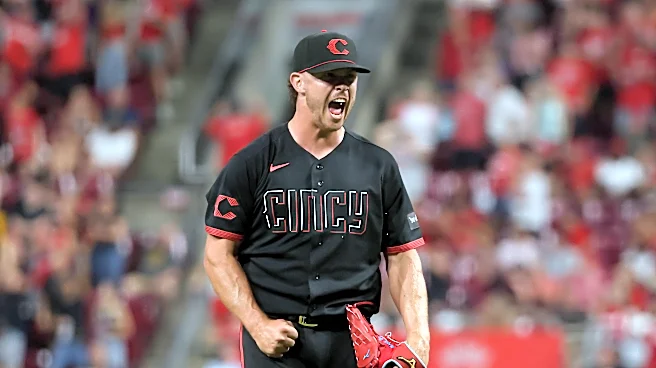
The Atlanta Braves are actively pursuing closer Raisel Iglesias, who is also drawing interest from the Detroit Tigers. Iglesias, 36, is coming off an All-Star season in 2026 where he posted a 1-2 record with a 2.55 ERA, 34 saves, and 64 strikeouts across
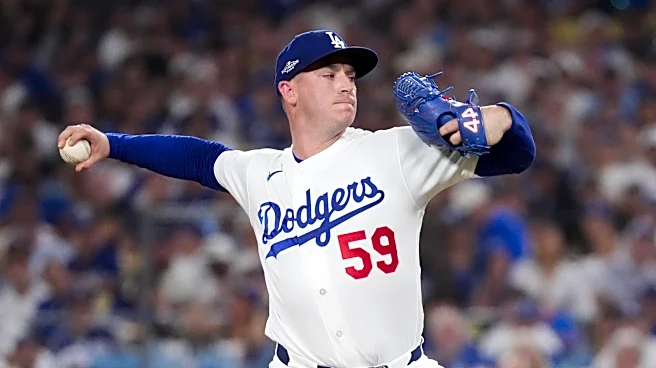
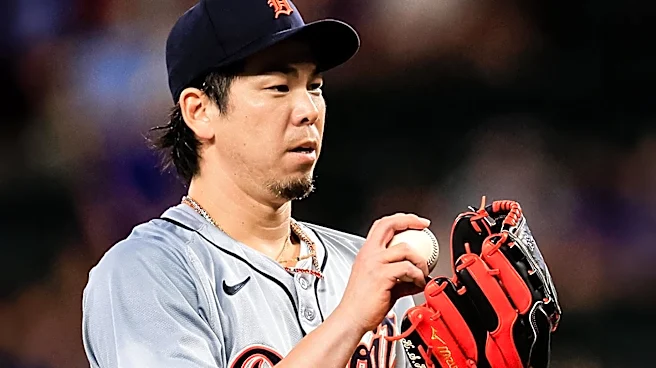
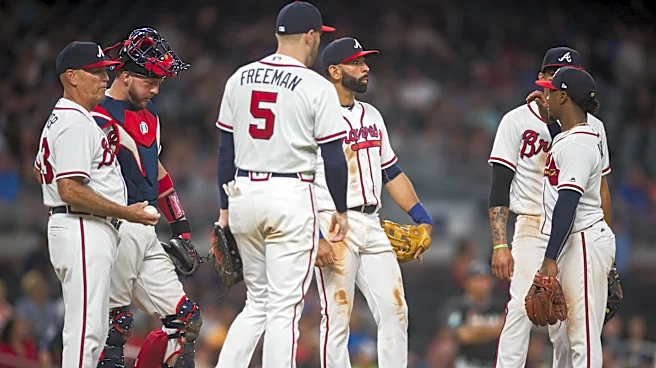
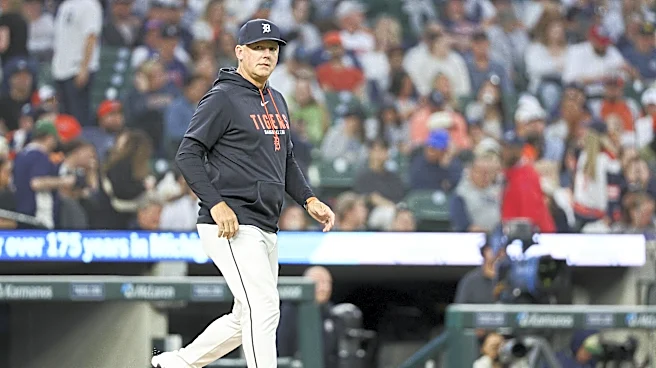
59 appearances. He converted 34 of 37 save opportunities, achieving a 91.9% conversion rate and a 1.08 WHIP. Iglesias has accumulated 287 career saves since his debut in 2015. The Braves, who had a successful 2026 season returning to the MLB playoffs and winning the NL East, aim to maintain their core bullpen. They have already secured Evan Phillips on a three-year, $35 million deal and Robert Suarez is under contract after signing a three-year deal during the 2025 offseason. Adding Iglesias would provide Atlanta with three experienced late-inning relief pitchers, though their specific roles would need to be determined. The Detroit Tigers, on the other hand, are seeking a proven closer after declining Kenley Jansen's $12 million club option, which left a void in their bullpen.
Why It's Important?
The pursuit of Raisel Iglesias highlights the Atlanta Braves' strategy to strengthen their bullpen depth, even after a successful 2026 season. By potentially adding Iglesias to a relief corps that already includes Evan Phillips and Robert Suarez, the Braves aim to create a formidable late-inning pitching staff. This move signals their commitment to sustained competitiveness in the MLB, particularly in high-leverage situations during the playoffs. For the Detroit Tigers, securing Iglesias would address a critical need for a proven closer, a role left vacant after Kenley Jansen's departure. A strong bullpen is crucial for any team aspiring to contend, as it directly impacts the ability to protect leads and win close games. The competition for Iglesias also underscores the value placed on experienced, high-performing relief pitchers in modern baseball, reflecting a broader trend where bullpens are increasingly seen as vital components of championship-caliber teams. The outcome of this pursuit will significantly influence the bullpen dynamics for both franchises heading into the next season.
What's Next?
The immediate next step involves Raisel Iglesias making a decision between the Atlanta Braves and the Detroit Tigers, or potentially other interested teams. Iglesias, who turns 37 in January, is likely seeking at least a two-year commitment based on his 2026 performance. The Braves are looking to add depth to their bullpen, while the Tigers are in need of a primary closer. This difference in role availability could influence Iglesias's decision, as Detroit can offer a more defined closing role. If Iglesias signs with Atlanta, the team will need to sort out the specific roles for him, Evan Phillips, and Robert Suarez, potentially moving to a closer-by-committee approach if any pitcher struggles. If he signs with Detroit, he would immediately fill their vacant closer position. The resolution of this free agency pursuit will shape the bullpen strategies and overall roster construction for both clubs as they prepare for the upcoming MLB season.
Beyond the Headlines
The competition for Raisel Iglesias reflects a deeper strategic shift in MLB team building, where bullpen construction has become a critical differentiator. Teams are increasingly investing in multiple high-leverage relievers rather than relying on a single dominant closer. For the Braves, already having Robert Suarez and Evan Phillips, the pursuit of Iglesias suggests a 'strength in numbers' approach, aiming to mitigate the inherent volatility of relief pitching through sheer depth. This strategy can reduce the pressure on any single pitcher and provide managerial flexibility in late-game situations. For the Tigers, their clear need for a closer highlights the immediate impact a single player can have on a team's ability to win. The outcome of this signing could also influence the broader free-agent market for relievers, setting benchmarks for contracts and roles. Furthermore, the age of Iglesias (37 in January) brings into focus the balance between proven performance and long-term investment, a common dilemma for teams evaluating veteran players in free agency.