


What's Happening?
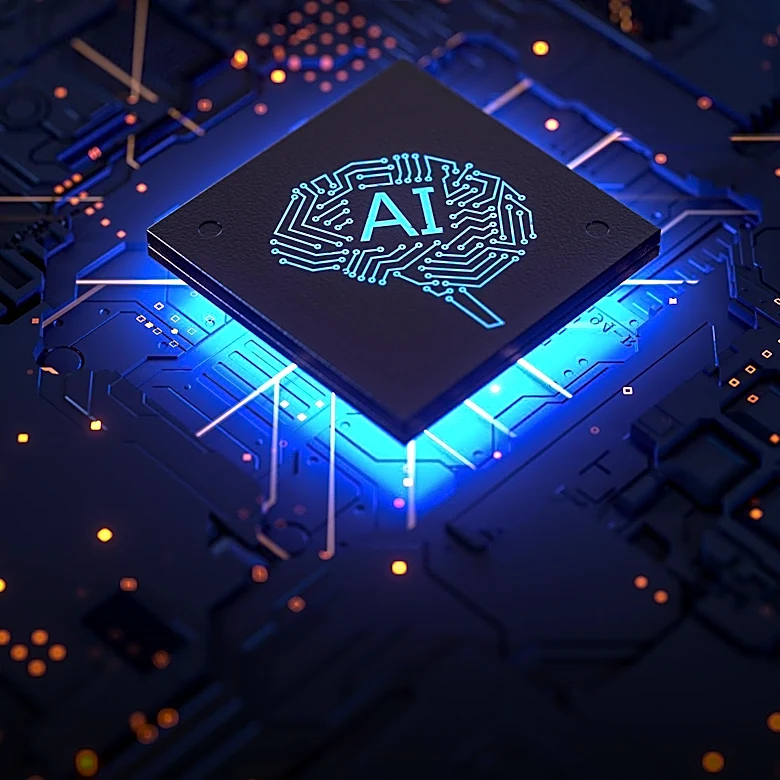
Edge AI PCs are increasingly becoming essential for industrial automation due to their ability to run AI workloads locally, offering significant benefits in reduced latency and increased security. Unlike traditional PCs that rely on cloud processing,
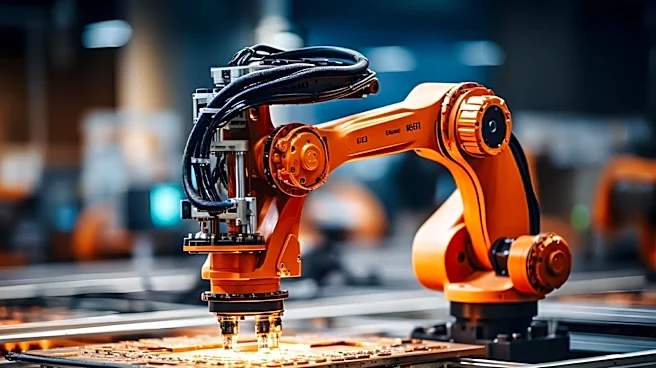
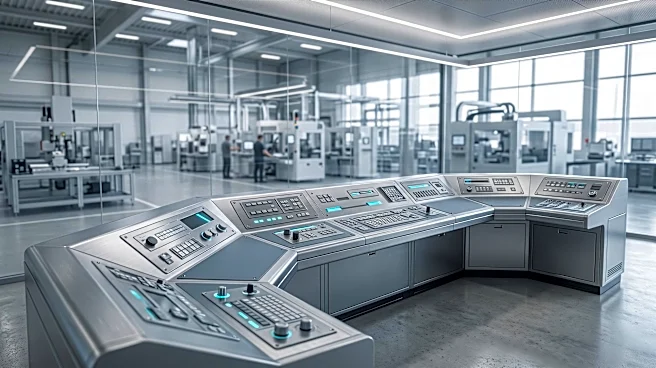
Edge AI PCs handle data acquisition, analysis, storage, and control on-premise, ensuring split-second reaction times and full containment of data. This local processing capability is crucial for applications such as machine vision, predictive maintenance, robotics, and quality control, where precision and fast response are paramount. For instance, in an assembly line, an Edge AI PC can analyze video feeds for non-compliance, notify robotic arms for intervention, and track equipment usage for scheduled repairs, all in real-time. The primary benefits include offline capability, instant feedback, on-device AI processing, reliability during internet outages, and enhanced security by keeping data fully contained on-premise.
Why It's Important?
The adoption of Edge AI PCs in industrial automation marks a critical advancement for U.S. manufacturing and other industrial sectors. This technology directly addresses growing concerns about data security and the need for immediate operational responses, which are vital for maintaining competitive advantage and operational integrity. By reducing reliance on cloud connectivity, U.S. industries can achieve greater autonomy and resilience in their operations, minimizing vulnerabilities to internet outages or external cyber threats. The enhanced speed and security provided by Edge AI PCs can lead to significant improvements in productivity, quality control, and safety within factories and industrial facilities. This shift also fosters innovation in hardware and software development within the U.S., as companies like Teguar offer specialized Edge AI PCs designed for demanding industrial environments. Businesses that integrate these systems stand to gain from optimized workflows, reduced downtime, and more efficient resource management, directly impacting their bottom line and market position.
What's Next?
The trend towards integrating Edge AI PCs into industrial automation is expected to accelerate as AI continues to shape industries globally. Manufacturers will increasingly seek devices capable of handling heavy AI workloads with fast response times. Key considerations for businesses will include AI acceleration options, processing power, memory and storage capacity, and connectivity for hybrid cloud/edge arrangements. Companies like Teguar are already offering specialized models, such as the Regis TB-7393 for large language models and powerful GPUs, and the TB-6145 for efficient, secure operations with lighter AI computation. The market will likely see further development in dedicated GPUs and NPUs for AI acceleration, along with robust, fanless designs suitable for harsh industrial environments. The emphasis will remain on efficiency, reliability, and durability, ensuring that these systems can seamlessly integrate into existing industrial infrastructures and support advanced AI applications.
Beyond the Headlines
The widespread adoption of Edge AI PCs in industrial settings carries broader implications for the workforce and the future of manufacturing. While these systems enhance efficiency and precision, they also necessitate a workforce with advanced technical skills to manage, maintain, and program these sophisticated machines. This could lead to a demand for new training programs and educational initiatives to upskill the labor force. Furthermore, the increased automation and real-time decision-making capabilities of Edge AI could redefine human-machine collaboration, potentially shifting human roles from direct operational tasks to oversight, strategic planning, and problem-solving. Ethical considerations regarding the autonomy of AI in critical industrial processes, data privacy within localized networks, and the potential for job displacement will also become increasingly relevant as this technology matures and becomes more pervasive across U.S. industries.