






What's Happening?
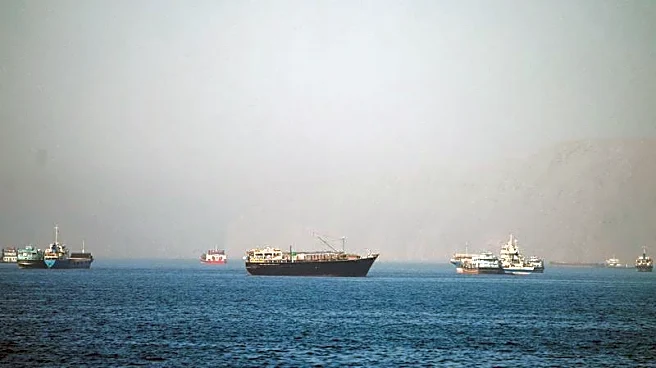
The recent agreement between the United States and Iran has led to a significant drop in crude oil prices. This development is primarily due to the anticipated reopening of the Strait of Hormuz, a critical shipping route for global oil supplies. The agreement aims
to end recent hostilities and allow Iran to resume oil exports under a special waiver from U.S. sanctions. As a result, traders are expecting an influx of Iranian crude into the global market, which has contributed to a decrease in oil prices. The International Energy Agency (IEA) has also lowered its forecast for global oil demand, citing slower economic growth and previously high fuel prices that have dampened demand. Despite low U.S. oil inventories, the market is adjusting to the potential increase in supply from the Middle East.
Why It's Important?
The reopening of the Strait of Hormuz and the potential increase in Iranian oil exports could significantly impact global oil markets. For the U.S., this development may lead to lower fuel prices, benefiting consumers and businesses reliant on oil. However, it also poses challenges for U.S. oil producers who may face increased competition from Middle Eastern oil. The agreement between the U.S. and Iran reduces geopolitical tensions, which have previously contributed to higher oil prices. This shift could stabilize the market and provide a more predictable environment for energy stakeholders. Additionally, the IEA's revised demand forecast suggests that the market may move towards a better balance, potentially easing concerns about supply shortages.
What's Next?
As the U.S.-Iran agreement progresses, the market will closely monitor the actual resumption of oil shipments through the Strait of Hormuz. Traders will be watching for any delays or complications in the agreement's implementation, which could affect oil prices. The U.S. Energy Information Administration's reports on domestic oil inventories will also be crucial in assessing the market's supply-demand balance. If Iranian oil exports increase as expected, it could lead to further price adjustments. Stakeholders, including oil companies and policymakers, will need to adapt to these changes and consider their implications for energy strategy and economic planning.