

What's Happening?
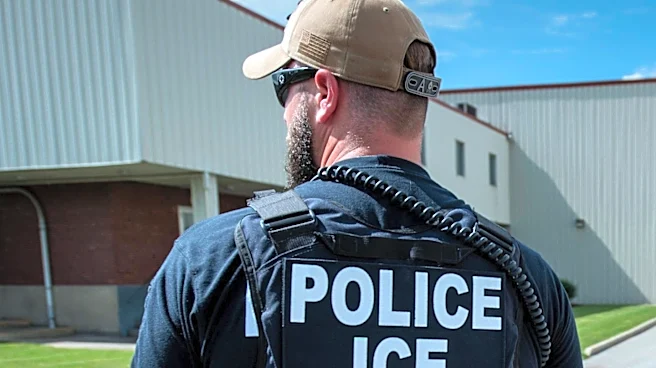
Actor Danny Trejo is facing criticism for his role in the upcoming film 'Pawn Shop,' produced by conservative media company The Daily Wire. The film's storyline, which features an ICE officer, has drawn controversy due to its perceived pro-Immigration
and Customs Enforcement (ICE) stance and its association with conservative commentator Ben Shapiro. Trejo's son, Gilbert Trejo, has publicly defended his father, stating that Danny Trejo was unaware of Shapiro's involvement and the film's political affiliations when he accepted the role. Gilbert claims his father was attracted to the opportunity to play a 'good guy'—a peaceful Mexican shop owner—and was not making a political statement. He further alleges that contractual obligations are preventing his father from publicly criticizing the film or walking away from the project without facing legal repercussions.
Why It's Important?
This controversy highlights the complex intersection of entertainment, politics, and personal ethics in Hollywood. It underscores the potential for actors to become inadvertently embroiled in political debates, especially when productions are backed by ideologically driven media companies. The situation raises questions about due diligence in accepting roles and the transparency of production companies regarding their political leanings. For Danny Trejo, a prominent Mexican-American actor known for his community support, his involvement in a film perceived as pro-ICE could alienate a significant portion of his fanbase and the broader immigrant community. The incident also sheds light on the contractual constraints that can limit an actor's ability to speak out or withdraw from a project, even when it conflicts with their personal values or public image.
What's Next?
The film 'Pawn Shop' is expected to be released, and the controversy surrounding Danny Trejo's involvement is likely to continue. The debate over the film's portrayal of immigration enforcement and its political undertones will probably intensify upon its release, potentially affecting its reception and box office performance. Gilbert Trejo's defense of his father aims to mitigate public backlash, but whether audiences will accept the explanation of contractual obligations and lack of prior knowledge remains uncertain. This situation could lead to increased scrutiny of actors' choices in future projects, particularly those with overt political themes or affiliations, and may prompt more detailed contractual clauses regarding political stances or affiliations of production companies.
Beyond the Headlines
The 'Pawn Shop' controversy delves into deeper issues of artistic freedom versus social responsibility, and the ethical considerations for artists working with politically charged content. It also exposes the challenges faced by actors, particularly those from marginalized communities, who may seek roles that offer positive representation but find themselves in productions with conflicting political messages. The incident reflects a broader cultural divide in the U.S., where entertainment is increasingly scrutinized through a political lens. This can lead to 'cancel culture' scenarios, where public figures face severe backlash for perceived missteps. The situation also highlights the power dynamics within the film industry, where contractual agreements can limit an individual's agency, even for established actors, forcing them to navigate complex ethical dilemmas under public pressure.