





What's Happening?
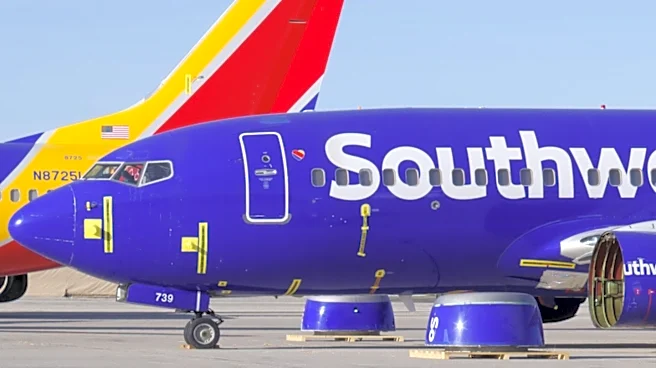
Shareholders of Southwest Airlines are appealing the dismissal of their securities fraud lawsuit, which stems from the airline's operational meltdown during Christmas 2022. The lawsuit alleges that Southwest, along with former CEO Gary Kelly, former President
Tom Nealon, and current CEO Bob Jordan, misled investors about the airline's technological preparedness and operational resilience. The plaintiffs claim that the airline downplayed risks associated with its outdated technology and presented a misleading picture of its ability to handle disruptions. A federal judge initially dismissed the case, ruling that while some statements might have been misleading, there was insufficient evidence to prove they were knowingly misleading or constituted deliberate deception. The judge noted that Southwest had disclosed technology risks in its filings and discussed the need for modernization, which would take years. The appeal to the Fifth Circuit Court of Appeals seeks to reinstate the lawsuit, arguing that the allegations, when considered collectively, demonstrate a persuasive inference of fraudulent intent.
Why It's Important?
This appeal is significant for corporate governance and investor protection within the U.S. airline industry. If the shareholders succeed, it could set a precedent for how companies are held accountable for public statements regarding operational capabilities and technological infrastructure, especially in industries prone to widespread service disruptions. For Southwest Airlines, a reversal of the dismissal would mean facing a potentially costly and reputation-damaging legal battle, adding to the financial impact of the 2022 meltdown, which cost the airline approximately a billion dollars. The outcome will also influence how other airlines and large corporations communicate their operational risks and technological investments to investors, potentially leading to more transparent disclosures. It underscores the ongoing tension between corporate disclosures and investor expectations, particularly when unforeseen events expose underlying vulnerabilities.
What's Next?
The Fifth Circuit Court of Appeals will now review the shareholders' appeal, considering whether the lower court correctly applied the legal standards for securities fraud, particularly the 'strong inference of fraudulent intent' requirement. The plaintiffs are arguing that the Supreme Court's Tellabs decision mandates considering all allegations together to establish a compelling inference of fraudulent intent. Southwest Airlines will likely continue to argue that while operational failures occurred, they do not constitute securities fraud, and that the company had adequately disclosed its technological challenges. The court's decision will determine if the lawsuit proceeds to discovery and potentially a trial, or if the dismissal is upheld, effectively ending the shareholders' legal pursuit for compensation related to the stock price drop following the 2022 disruption.
Beyond the Headlines
The case highlights a broader issue within the U.S. corporate landscape: the challenge of balancing investor confidence with the reality of complex operational systems and the inherent risks of large-scale enterprises. The 2022 Southwest meltdown exposed not only technological deficiencies but also a potential gap in institutional knowledge due to a significant portion of the workforce being new. This situation raises questions about the long-term impact of underinvestment in critical infrastructure and the effectiveness of corporate disclosures in conveying genuine operational risks. The legal proceedings could also influence how unions' warnings about operational weaknesses are perceived and acted upon by management, potentially leading to increased scrutiny of internal communications and their implications for investor relations. The outcome will contribute to the ongoing debate about the scope of corporate liability for operational failures that affect shareholder value.