
What's Happening?
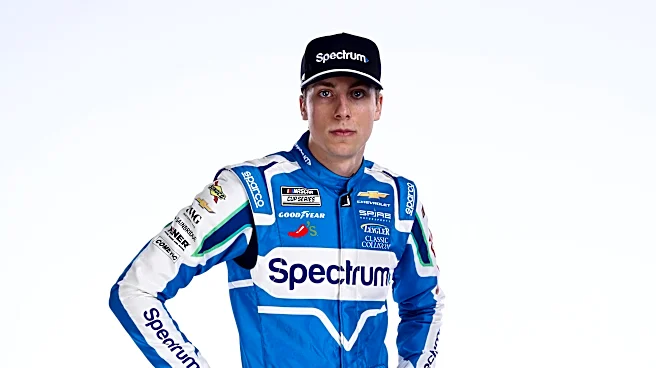
Spire Motorsports co-owner Jeff Dickerson announced the suspension of driver Carson Hocevar from the NASCAR Cup Series Championship Race at Homestead-Miami Speedway. This decision followed an incident during the Xfinity 500 at Martinsville Speedway where
Hocevar's No. 77 Chevrolet brake-checked Austin Cindric's No. 2 Team Penske Ford multiple times, causing terminal damage to Cindric's car. NASCAR subsequently fined Hocevar $100,000 and deducted 25 driver points for actions detrimental to stock-car racing. Spire Motorsports replaced Hocevar with Justin Haley for the season finale. Dickerson described the suspension as the toughest decision of his ownership career, emphasizing that while the team supports Hocevar's aggressive driving style, his actions at Martinsville crossed an unacceptable line. Hocevar himself addressed the suspension in a social media video, accepting responsibility and clarifying that Spire's decision was internal, not pressured by NASCAR.
Why It's Important?
This suspension underscores NASCAR's and individual teams' commitment to maintaining sportsmanship and safety standards within the highly competitive racing environment. For Spire Motorsports, the decision to suspend a driver, especially one who had achieved a Cup Series victory earlier in the season, highlights a prioritization of team values and driver conduct over immediate competitive outcomes. It sends a clear message to all drivers that aggressive tactics, while sometimes tolerated, have boundaries, and actions deemed 'detrimental to stock-car racing' will incur significant penalties. This incident could influence how other teams manage their drivers' on-track behavior, potentially leading to a more disciplined approach to racing ethics across the series. The financial penalty and point deduction also impact Hocevar's career trajectory and the team's standing, demonstrating the tangible consequences of such actions.
What's Next?
With the 2026 NASCAR season concluded, Carson Hocevar and Spire Motorsports will be looking ahead to the 2027 season. Jeff Dickerson expressed hope that the suspension will serve as a crucial learning experience for Hocevar, helping him to make better decisions on the track without losing his aggressive racing style. The team aims for Hocevar to understand the established boundaries of acceptable racing conduct. Hocevar's public acceptance of responsibility suggests a potential for growth and a more measured approach in future races. The incident may also prompt NASCAR officials to review and potentially reinforce rules regarding on-track conduct, especially concerning intentional contact or dangerous maneuvers, to prevent similar occurrences and ensure fair play in upcoming seasons.
Beyond the Headlines
The incident and subsequent suspension of Carson Hocevar delve into the complex balance between aggressive, exciting racing that fans often crave, and the ethical and safety standards required in professional sports. It raises questions about the 'line' in competitive racing—where does hard racing end and unsportsmanlike conduct begin? The comparison by Dickerson to a parent taking away car keys from a teenager highlights the paternalistic role team owners sometimes adopt to guide young talent. This event could spark broader discussions within the NASCAR community about driver development, the psychological pressures on young drivers, and the long-term impact of such disciplinary actions on a driver's reputation and career. It also subtly reinforces the idea that while individual talent is crucial, adherence to team and league ethics is paramount for sustained success.