





What's Happening?
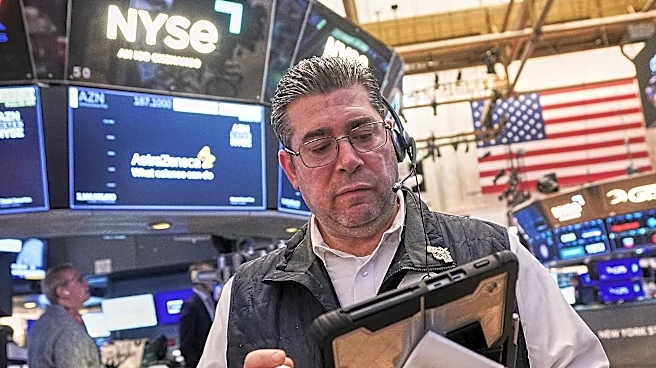
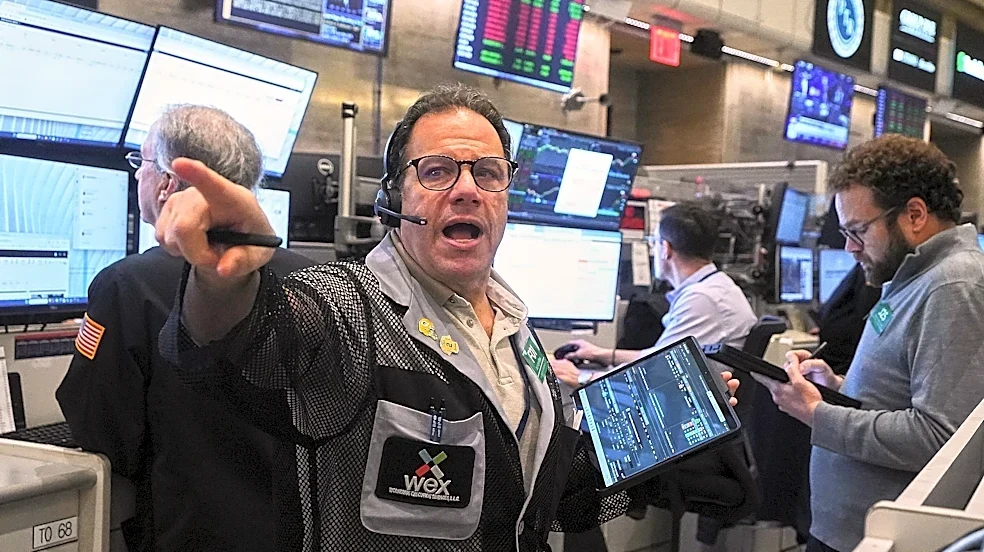
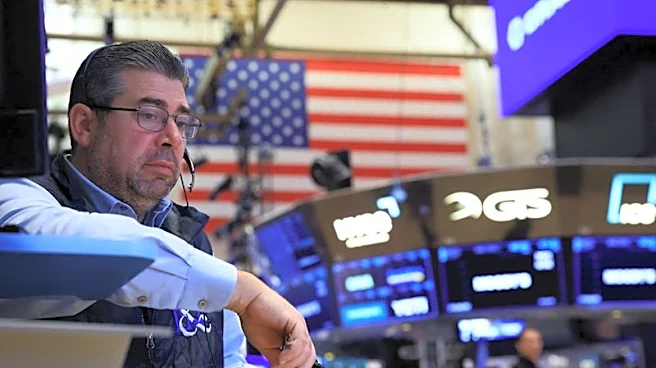
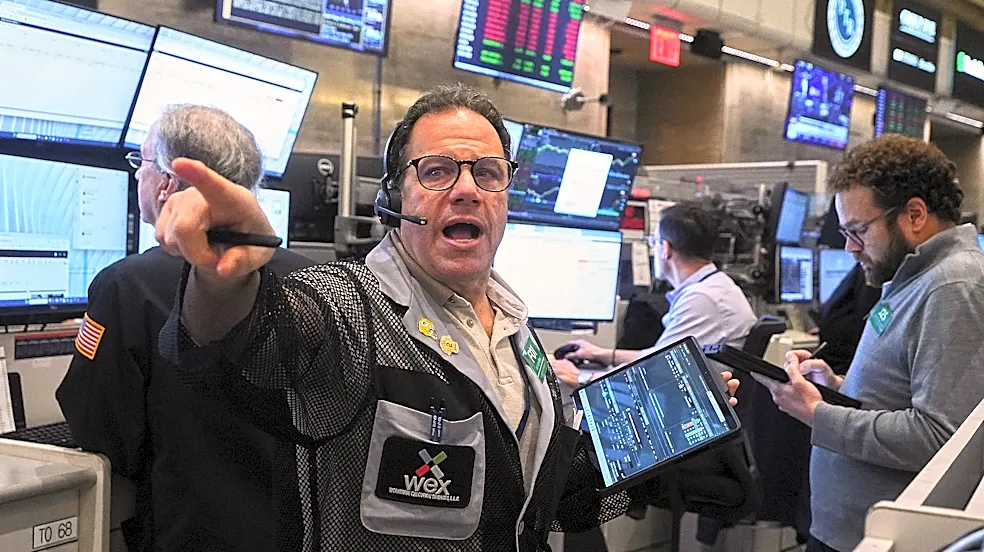
US tech stocks are undergoing significant volatility, primarily driven by investor concerns regarding the sustainability of substantial capital investments in Artificial Intelligence (AI). The Nasdaq Composite, heavily weighted with tech firms involved
in the AI boom, recently dropped 2.6%, marking its steepest decline since June 5. This downturn has impacted major tech companies, with Meta Platforms Inc. experiencing a nearly 7% drop after increasing its projected capital spending for the year to between $135 billion and $145 billion, despite its net profit falling short of expectations. Amazon.com Inc. fell 4.6%, Nvidia Corp. dropped 4.4%, and both Tesla Inc. and Alphabet Inc. saw declines of 3.1%. Microsoft Corp. also decreased by 2.2%. The sell-off extended to other significant tech players like Intel Corp. and Advanced Micro Devices Inc., which both fell approximately 8%, and Broadcom Inc., which slid 4.3%. Apple Inc. was an exception, rising 1.2%. This market movement has led to a debate about whether the current AI investment trend is forming a market bubble, reminiscent of the dot-com crash in 2000.
Why It's Important?
The current volatility in US tech stocks and the broader market's reaction to AI investments highlight a critical juncture for the technology sector and the overall economy. The substantial capital expenditures by tech giants like Meta, Amazon, and Nvidia in AI infrastructure are raising questions about their long-term profitability and the potential for an 'AI bubble.' If these investments do not yield the expected returns, it could lead to significant financial repercussions for these companies and their investors. The shift in investor sentiment, as noted by Jay Goldberg, a senior analyst at Seaport Research Partners, suggests that market movements are currently driven more by fear and speculation than by fundamental changes. This uncertainty could deter future investments in AI, potentially slowing technological advancement or reallocating capital to more stable sectors. The underperformance of the S&P 500 compared to its equal-weighted counterpart indicates that large-cap tech stocks are disproportionately affecting market indices, suggesting a rotation of money into other sectors like Consumer Staples and Health Care, which are showing strength and stability.
What's Next?
The immediate future for tech stocks remains uncertain, with continued debate over the sustainability of AI investments. Analysts are divided, with some viewing current spending levels as unsustainable and others believing AI will revolutionize society enough to justify the costs. Companies like Meta are committed to aggressive AI spending, forecasting annual capital expenditure between $135 billion and $145 billion, which has led to negative free cash flow for the first time in a decade and a rise in credit default swaps. This indicates that the market will closely monitor the returns on these massive AI investments. The performance of the Nasdaq Composite and other tech-heavy indices will likely continue to be influenced by investor sentiment and earnings reports from major tech players. If the trend of money rotating out of large-cap tech stocks into more defensive sectors like Consumer Staples and Health Care continues, it could signal a broader market shift and potentially impact the valuations of tech companies. The upcoming earnings reports and economic indicators will be crucial in shaping investor confidence and determining the next direction for tech stocks.
Beyond the Headlines
The current market dynamics extend beyond mere stock price fluctuations, touching upon deeper economic and ethical considerations. The intense focus on AI investment raises questions about the allocation of vast financial resources and the potential for technological monopolies. If only a few large corporations can afford the immense capital required for AI development, it could stifle innovation from smaller players and concentrate power. The debate over an 'AI bubble' also brings to light the psychological aspects of market behavior, where sentiment can override fundamentals, leading to rapid shifts and potential instability. Furthermore, the significant investments in AI infrastructure, such as data centers and graphics processing units, have environmental implications, including energy consumption and resource depletion, which are often overlooked in financial analyses. The long-term societal impact of AI, including job displacement and ethical concerns around autonomous systems, also looms large, suggesting that the current financial discussions are merely the tip of a much larger iceberg of challenges and opportunities presented by this transformative technology.