




What's Happening?
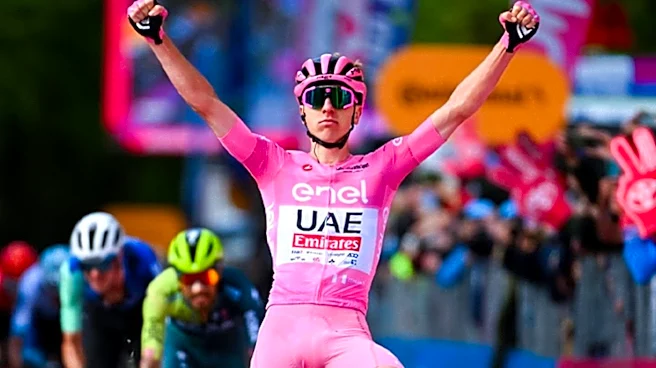
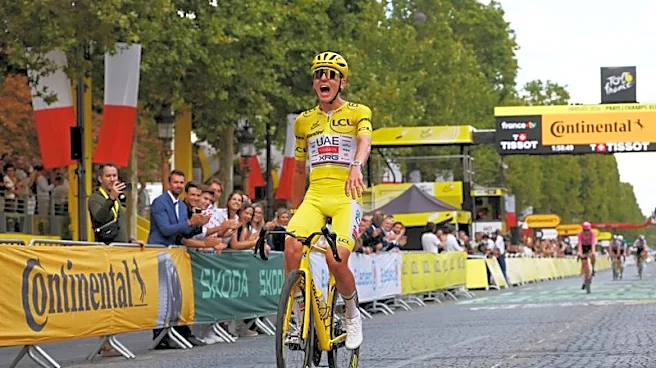
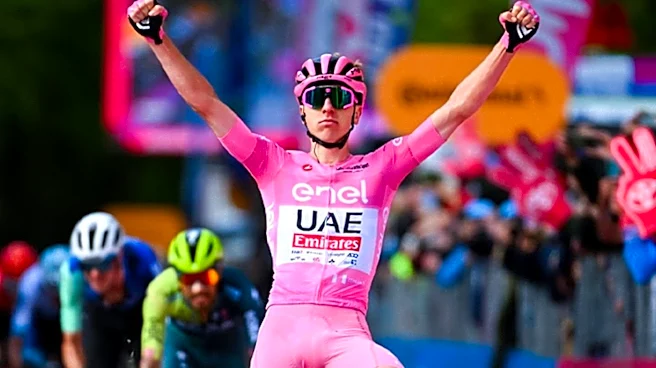
Tadej Pogačar, a renowned cyclist, utilizes polarized training, which involves spending 80% of training at low intensity and 20% at high intensity. This method, supported by research from exercise physiologist Stephen Seiler, is used by elite athletes
across various sports. Polarized training is designed to improve aerobic capacity and fatigue resistance, making it applicable to both professional athletes and recreational exercisers. The approach emphasizes long, low-intensity sessions complemented by short, high-intensity efforts, optimizing performance and recovery.
Why It's Important?
Polarized training offers a scientifically-backed method for improving endurance and performance, applicable to athletes at all levels. By focusing on aerobic adaptations and fatigue resistance, this training model can enhance cardiovascular health and muscle efficiency. Recreational athletes can benefit from this approach, achieving significant improvements without the risk of overtraining. The widespread adoption of polarized training could lead to more effective training regimens, reducing injury rates and improving overall fitness outcomes.