
What's Happening?
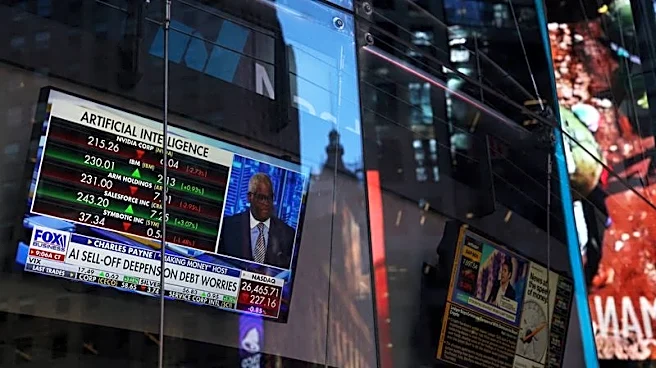
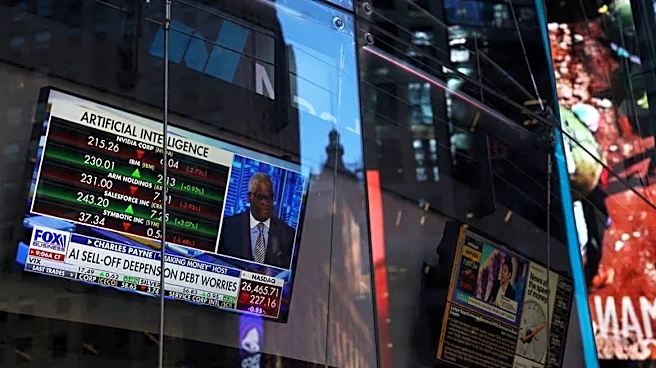
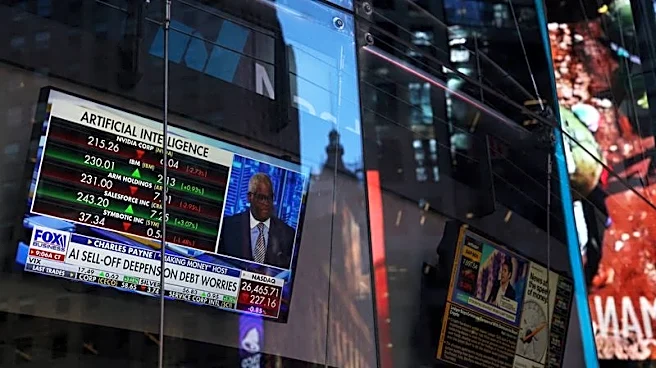
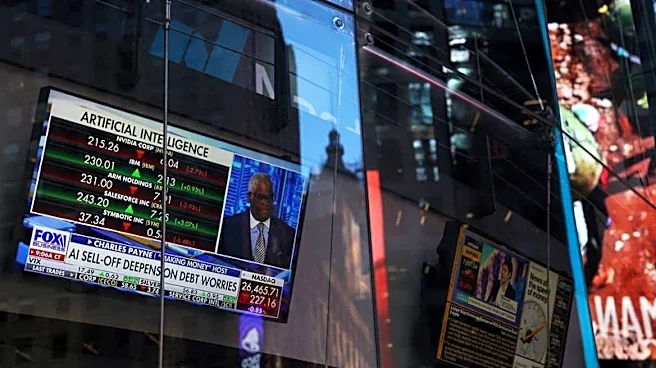
The current boom in Artificial Intelligence (AI) investment is projected to slow down, with capital expenditures expected to fall by approximately 10% in 2028 after a period of continued growth in 2027.
This forecast, from Capital Economics Chief Economic Adviser Vicky Redwood, suggests that while AI still holds potential for productivity gains, the revenue generated may not sustain the current rate of investment. Hyperscalers are anticipated to spend $800 billion this year, doubling from the previous year, with estimates of over $1 trillion in 2027. However, Redwood calculates that AI-related revenues would need to increase tenfold by 2030 to justify this level of spending. A slowdown in AI capital expenditure could trim the U.S. GDP growth rate by 0.3 percentage points, with a 10% drop potentially reducing GDP by 0.1%. The stock market is expected to react sooner, with the S&P 500 potentially falling 12% below its current level by the end of 2027.
Why It's Important?
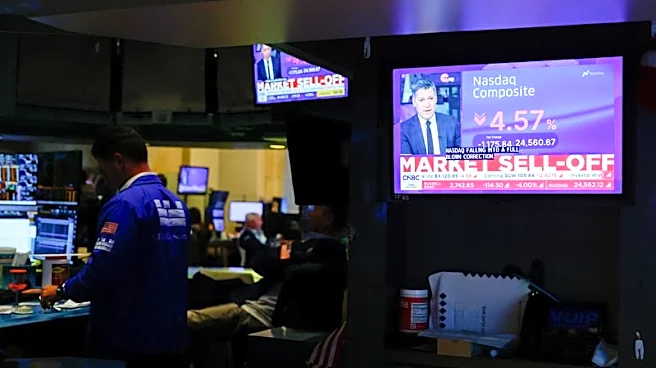
The anticipated slowdown in AI investment carries significant implications for the U.S. economy and financial markets. The AI sector has been a major driver of recent economic growth and stock market performance. A deceleration in this investment could lead to a moderation of GDP growth and a correction in tech-heavy stock indices, impacting investor wealth and consumer spending through the wealth effect. While the direct impact on U.S. GDP is projected to be a 'slight haircut' compared to more AI-dependent economies, the interconnectedness of the global economy means that a significant shift in a leading sector like AI will have ripple effects. This forecast highlights the need for investors and policymakers to consider the sustainability of current growth trajectories and prepare for potential adjustments.
What's Next?
Investors should anticipate increased volatility in tech stocks and potentially broader market corrections as the AI investment boom moderates. Companies heavily reliant on AI capital expenditure may need to re-evaluate their growth strategies and financial projections. Policymakers will need to monitor the economic impact of this slowdown, particularly concerning its effects on GDP growth and employment. While a major downturn is not explicitly predicted for the U.S. economy, the potential for slower growth in 2028 suggests a need for cautious economic management. The continued adoption of AI, even with reduced investment, is still expected to boost productivity, indicating a transition to a more sustainable, albeit slower, pace of integration.
Beyond the Headlines
The projected moderation of the AI investment boom raises questions about the nature of technological bubbles and the long-term sustainability of rapid, debt-fueled growth in emerging sectors. It underscores the challenge of accurately valuing future revenue streams for nascent technologies and the potential for market corrections when expectations outpace reality. This scenario could also prompt a re-evaluation of investment strategies, shifting focus from speculative growth to more tangible returns and sustainable business models within the AI ecosystem. Furthermore, the impact on productivity, even with slower investment, suggests that AI's transformative power will continue to unfold, albeit at a more measured pace, necessitating ongoing adaptation in various industries and the workforce.