





What's Happening?
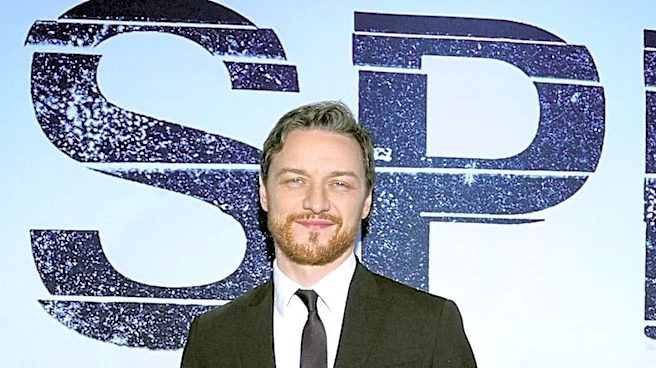
Actor James McAvoy recently revealed that he was bullied by a co-star on his first day as a professional actor while filming the HBO miniseries 'Band of Brothers' in 2001. During an appearance on 'Watch What Happens Live with Andy Cohen,' McAvoy recounted
how an unnamed cast member, along with several friends, pointed and laughed at him for approximately three minutes. This incident occurred during a crowded bar scene. McAvoy attributed the tension to a perceived disparity in roles; many cast members had spent months on set with minimal dialogue, while he, despite appearing in only one episode, had a significant character arc and numerous lines. He rated this particular day a '2 out of 10' but gave his overall experience on the show a '9 out of 10.' McAvoy declined to name the individual but confirmed it was not David Schwimmer, whose picture was shown during the interview. Two other actors, Dexter Fletcher and Robin Laing, reportedly helped ease the situation by inviting McAvoy to spend time with them.
Why It's Important?
This revelation highlights the often-unseen challenges and dynamics within professional acting environments, particularly for newcomers. It underscores the potential for resentment and unprofessional behavior when perceived inequalities in opportunity or screen time arise among cast members. For aspiring actors, McAvoy's experience serves as a cautionary tale about navigating competitive and sometimes hostile work settings, even on high-profile productions like 'Band of Brothers,' which was created by industry giants Tom Hanks and Steven Spielberg. The incident also sheds light on the importance of supportive colleagues, as demonstrated by Fletcher and Laing, in mitigating negative experiences. While the event occurred over two decades ago, it resonates with ongoing discussions about workplace conduct and the psychological impact of bullying in any professional field, including the entertainment industry.
What's Next?
While the incident occurred in the past, McAvoy's public recounting of the experience could reignite conversations within the entertainment industry about set etiquette and the treatment of actors, especially those new to the profession. It may encourage production companies and unions to reinforce guidelines for professional conduct and provide clearer avenues for reporting and addressing workplace bullying. Although McAvoy has not indicated any further action regarding the past incident, his willingness to share his story could empower other actors to speak out about similar experiences. The focus will likely remain on the broader implications for industry standards rather than specific repercussions for the unnamed co-star, given the time elapsed since the event.
Beyond the Headlines
McAvoy's account delves into the psychological pressures faced by actors, particularly the vulnerability of those just starting their careers. The perceived unfairness of a newcomer receiving a more substantial role than seasoned cast members, despite less time on set, exposes the competitive and often hierarchical nature of the film and television industry. This dynamic can foster environments where jealousy and resentment manifest as bullying, impacting mental well-being and professional integration. The incident also subtly touches upon the power dynamics at play, where established actors might exert influence over newer ones. The fact that McAvoy still remembers this specific day vividly, despite his overall positive experience on the show, underscores the lasting impact of such negative interactions and the importance of fostering a respectful and inclusive work culture in creative fields.