





What's Happening?
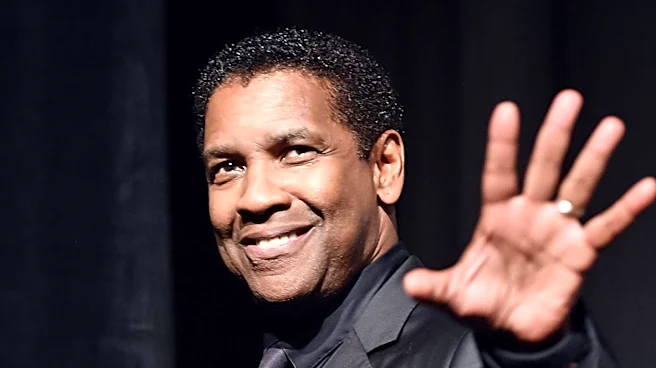
Denzel Washington has expressed regret over his decision to turn down the role of Detective David Mills in the 1995 cult thriller 'Seven,' a part ultimately played by Brad Pitt. According to an interview with Playboy magazine in 2013, Washington found
the script 'too demonic' and the plot too dark, feeling it veered too close to horror cinema, a genre he was not accustomed to at the time. Despite his initial reservations, the film, directed by David Fincher, went on to achieve significant critical and commercial success, grossing over $328 million worldwide on a modest budget of $33 million. Washington's decision highlights a common dilemma for actors in evaluating scripts that push genre boundaries or explore darker themes. The role of Detective Mills, alongside Morgan Freeman's Detective William R. Somerset, became iconic in the thriller genre, solidifying the film's place as a cinematic masterpiece.
Why It's Important?
This revelation is important as it offers insight into the decision-making processes of prominent actors and the potential impact of those choices on their careers and cinematic history. For Denzel Washington, a highly respected actor known for his diverse roles, declining 'Seven' represents a missed opportunity to be part of a critically acclaimed and commercially successful film that defined a genre. It also underscores how an actor's perception of a script's tone or genre can influence their career trajectory. The film's success with Brad Pitt in the role demonstrates how different actors can bring unique interpretations to characters, potentially altering the film's overall impact. This scenario also serves as a case study in Hollywood for how initial rejections by A-list actors can open doors for others, sometimes leading to career-defining performances for those who ultimately take on the roles.
What's Next?
While Denzel Washington has expressed regret, his career has continued to flourish with numerous acclaimed performances and awards, including an Oscar for 'Training Day.' This past decision is unlikely to significantly alter his future projects or public perception, but it may serve as a cautionary tale for emerging actors about the long-term implications of turning down roles based solely on initial genre discomfort. The enduring popularity of 'Seven' ensures that discussions about its casting choices will likely continue in film retrospectives and fan communities. Washington has since taken on roles with darker undertones, such as in 'Fallen' and 'Bone Collector,' suggesting a later willingness to explore more intense narratives, though these films did not achieve the same critical success as 'Seven.'
Beyond the Headlines
The story of Denzel Washington turning down 'Seven' delves into the broader artistic and commercial considerations within the film industry. It highlights the subjective nature of script evaluation and how an actor's personal comfort with certain themes can influence their choices. This incident also touches upon the 'what if' scenarios that often fascinate film enthusiasts, imagining how different casting choices might have reshaped iconic movies. Furthermore, it subtly underscores the pressure on actors to make career-defining decisions, often without the benefit of hindsight. The film's exploration of the seven deadly sins and its dark, psychological narrative might have been a departure for Washington at the time, but his later roles suggest an evolution in his artistic boundaries, demonstrating that actors' preferences and willingness to experiment can change over time.