


What's Happening?
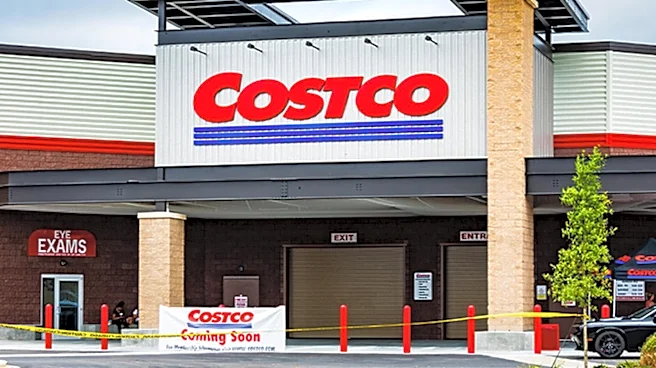
Costco CEO Ron Vachris has emphasized the significant role of the company's private label, Kirkland, in driving sales and influencing pricing across the retail sector. According to Vachris, the presence of Kirkland products in Costco warehouses creates
a 'halo effect' that compels national brands to lower their prices. He stated in an interview with The Wall Street Journal that a formidable private label known for quality discourages other brands from maintaining significantly higher prices. Kirkland, which encompasses approximately 600 different products ranging from apparel to food items, is a key component of Costco's strategy to maintain a tight inventory, generate excitement for new releases, and keep prices competitive for consumers. This approach has proven successful for Costco and other retailers that heavily invest in private labels.
Why It's Important?
The strategy articulated by CEO Ron Vachris underscores the competitive pressure that strong private labels like Kirkland exert on national brands within the U.S. retail market. This dynamic benefits consumers by fostering a more competitive pricing environment, potentially leading to lower costs for a wide array of products. For national brands, it necessitates continuous innovation and value proposition adjustments to remain competitive against high-quality, lower-priced private label alternatives. Costco's success with Kirkland demonstrates how a well-executed private label strategy can not only boost a retailer's own sales and margins but also shape broader market pricing trends. This trend could lead to increased market share for retailers with strong private labels and potentially force national brands to re-evaluate their distribution and pricing strategies.
What's Next?
The continued success and strategic expansion of private labels like Kirkland suggest that this trend will likely intensify. Other retailers may seek to emulate Costco's model by investing more heavily in their own private label offerings, further increasing competition for national brands. Consumers can anticipate a continued focus on value and quality from private labels, potentially leading to a broader selection of store-brand alternatives across various product categories. National brands will need to adapt by emphasizing unique selling propositions, brand loyalty, and potentially exploring new pricing models to maintain their market position in an increasingly competitive landscape influenced by powerful private labels.
Beyond the Headlines
The 'halo effect' described by CEO Ron Vachris extends beyond mere price competition; it reflects a fundamental shift in consumer perception and loyalty. As private labels like Kirkland gain a reputation for quality, they challenge the long-held belief that national brands inherently offer superior products. This shift could lead to a re-evaluation of brand equity and marketing strategies across the consumer goods industry. It also highlights the power of retailers to shape consumer preferences and market dynamics, potentially leading to a more consolidated retail landscape where retailers with strong private labels hold significant leverage over their suppliers. The ethical implications for national brands include the pressure to maintain quality while facing downward pricing pressure, potentially impacting their profit margins and investment in innovation.