






What's Happening?
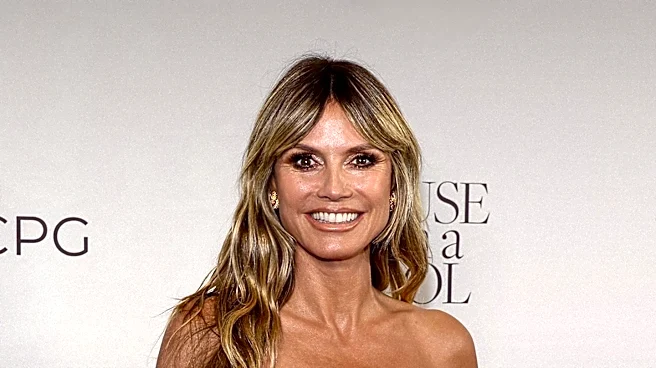
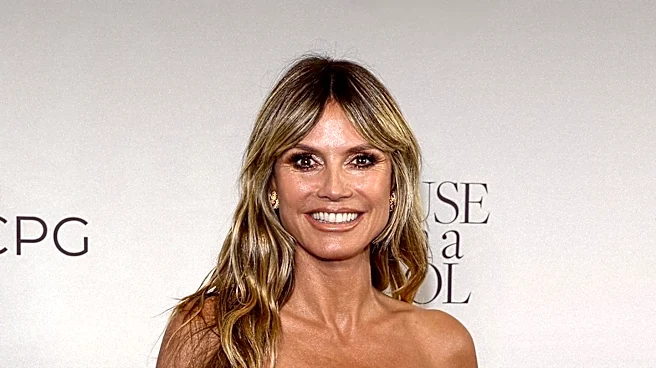
Heidi Klum is the face of s.Oliver's new 'Casual Since Forever' campaign, which uniquely features an AI-generated younger version of herself from the 1990s. The campaign includes a video and images where the present-day Klum interacts with her younger self,
aiming to highlight themes of change and constancy. The 1990s setting is chosen to align with Klum's career beginnings and the brand's Vintage Collection, which reinterprets fashion elements from that decade. While Klum is the brand face, she is not involved in designing the collection. The campaign seeks to sharpen s.Oliver's positioning as a casual brand by connecting Klum's personal evolution with the brand's development, emphasizing a timeless, casual style. The use of AI to create the younger Klum is explicitly marked, acknowledging that the images are not historical records but rather digitally reconstructed for the campaign.
Why It's Important?
This campaign is significant for the fashion and advertising industries as it showcases an innovative application of artificial intelligence in celebrity endorsements. By using AI to create a younger version of Heidi Klum, s.Oliver is exploring new avenues for storytelling and brand messaging, potentially setting a precedent for how brands can leverage technology to evoke nostalgia and demonstrate brand longevity. The campaign's explicit labeling of AI-generated content also contributes to ongoing discussions about transparency in advertising and the ethical use of AI in media. For consumers, it presents a novel visual experience that blurs the lines between reality and digital creation, potentially influencing perceptions of authenticity in marketing. The focus on the 1990s also taps into a broader cultural trend of nostalgia, which can drive consumer engagement and sales for the Vintage Collection.
What's Next?
The success of s.Oliver's 'Casual Since Forever' campaign, particularly its use of AI, could influence future marketing strategies across various industries. Other brands may explore similar AI-driven campaigns to create unique narratives and engage with audiences. The campaign's approach to transparency regarding AI-generated content might also prompt further industry discussions and potentially lead to clearer guidelines or standards for disclosing AI use in advertising. If the campaign proves effective in boosting sales and brand recognition, it could accelerate the adoption of AI tools for creating dynamic and personalized marketing content. Conversely, if consumers react negatively to the perceived artificiality, it could lead to a more cautious approach to AI integration in celebrity endorsements.
Beyond the Headlines
The campaign delves into deeper implications concerning authenticity and the perception of reality in the digital age. By artificially creating a past interaction, s.Oliver raises questions about how much of our perceived history and personal narratives can be manufactured or reinterpreted through technology. While the campaign explicitly labels the AI-generated content, it still highlights the growing capability of AI to create convincing, yet non-existent, historical moments. This could lead to a broader societal conversation about the impact of AI on memory, identity, and the construction of public images. The campaign also subtly explores the commercialization of nostalgia, using a reconstructed past as an emotional selling point, which could have long-term effects on how cultural history is presented and consumed.