




What's Happening?
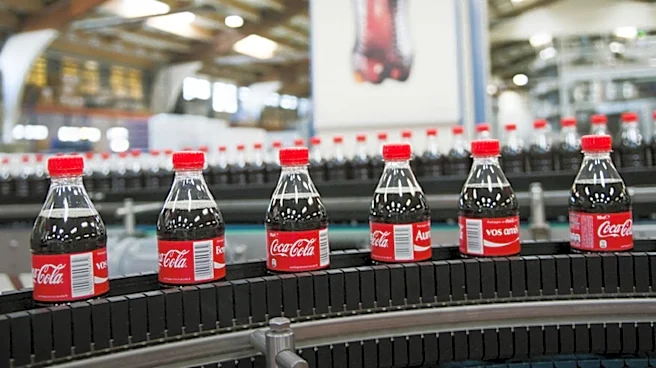
The carbonated soft drink (CSD) category in U.S. convenience stores is experiencing a shift, with premium products, including modern sodas and functional beverages, driving a significant share of dollar growth. According to Jacob Jordan, category insight
manager at McLane Co., consumers are increasingly seeking beverages that offer benefits beyond simple refreshment, such as high protein or probiotics. Additionally, nostalgia-driven innovations are re-energizing the category by offering fresh takes on familiar flavors. For the 52-week period ending September 6, the $10.9 billion CSD category saw a modest 0.8% increase in dollars, while units were down 3.3%. Retailers are advised to view the CSD category as a portfolio, balancing traditional offerings with these newer, wellness-focused options to attract a broader consumer base, including younger and health-conscious individuals.
Why It's Important?
This trend is crucial for the U.S. retail and beverage industries as it signals an evolving consumer preference towards health and wellness. The growth of functional beverages and modern sodas indicates that consumers are willing to pay more for products that offer perceived health benefits or unique experiences. This shift impacts product development, marketing strategies, and shelf space allocation for retailers. Companies that adapt by innovating with new formulations and flavor combinations, particularly those addressing cognitive wellness, digestive health, and everyday nutrition, stand to gain market share. Conversely, brands that fail to evolve may see their traditional CSD sales continue to decline. For smaller retailers, staying nimble and regularly refreshing planogram assortments, along with leveraging bundling opportunities, is critical to capturing this growth and maintaining relevance.
What's Next?
McLane Co. anticipates that functional and modern soda segments will continue to be areas of opportunity, driven by ongoing innovation in formulations and flavor combinations. Retailers are encouraged to monitor sales velocity, be open to testing emerging brands, and ensure their assortments reflect local shopper preferences. The focus will be on balancing trusted favorites with meaningful innovation and creating compelling meal and snack occasions through bundled offers. Some retailers, like Temp-Stop, are considering self-delivery models to gain more control over their cooler assortments and respond more effectively to consumer demand for new products, including gut-healthy sodas. This suggests a future where retailers have greater autonomy in curating their beverage offerings to align with evolving consumer tastes.
Beyond the Headlines
The rise of functional beverages and modern sodas reflects a deeper cultural shift in the U.S. towards personalized health and wellness. Consumers are becoming more proactive about their health, seeking out products that offer specific benefits rather than just general refreshment. This trend is not limited to beverages but is evident across the broader food and consumer goods sectors. The 'nostalgia-driven innovations' also highlight a desire for comfort and familiarity, often combined with modern health attributes. This dual demand for both innovation and tradition presents a complex challenge and opportunity for brands. The emphasis on data-driven category management and flexible assortments also points to the increasing sophistication of retail strategies, where understanding consumer behavior and local preferences is paramount for success in a highly competitive market.