







What's Happening?
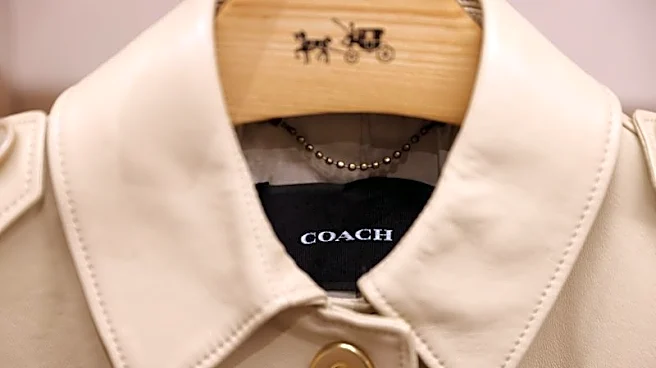
Tapestry, Inc. (NYSE: TPR), the parent company of Coach and Kate Spade, announced first-quarter financial results for fiscal year 2027 that surpassed internal expectations. The company reported $1.9 billion in revenue, marking a 12% pro forma growth,
primarily driven by a 16% constant currency increase at its Coach brand. Gross margins expanded, contributing to a 32% rise in earnings per share to $1.82. Tapestry also increased its full-year guidance for revenue to $8.5-$8.6 billion and raised its planned capital returns to shareholders to $2 billion for fiscal 2027. CEO Joanne Crevoiserat highlighted broad-based growth across global regions, with significant strength in Greater China and Europe, leading to market share gains. The company's 'Amplify' strategy, which focuses on acquiring Gen Z consumers and enhancing its global store fleet, is cited as a key driver of this performance. Coach alone welcomed over 2.1 million new customers, with approximately 40% being Gen Z, demonstrating the brand's success in attracting younger demographics.
Why It's Important?
Tapestry's strong Q1 performance and optimistic outlook signal robust health within the luxury fashion sector, particularly for accessible luxury brands like Coach. The focus on Gen Z consumers is crucial, as this demographic represents a significant future market for luxury goods. By successfully engaging younger buyers through targeted marketing and store experiences, Tapestry is positioning itself for sustained long-term growth. The expansion of gross margins and increased capital returns to shareholders underscore the company's financial discipline and commitment to investor value. This positive trend could influence other fashion retailers to re-evaluate their strategies for customer acquisition and global market penetration, especially in high-growth regions like Greater China and Europe. The continued investment in the 'Amplify' strategy, including store renovations and digital engagement, suggests a forward-looking approach to retail that prioritizes customer experience and brand relevance in an evolving market.
What's Next?
Tapestry plans to continue its strategic investments in the 'Amplify' strategy, focusing on customer acquisition, particularly among Gen Z consumers, and further enhancing its global store fleet. The company expects to expand its expressive luxury store concept to impact approximately 80% of its traffic by fiscal year 2030. For Kate Spade, the company is prioritizing sharpening creative execution and product storytelling under its newly appointed Executive Creative Director, Jonathan Saunders, to return the brand to sustainable, profitable growth. While Kate Spade's revenue declined by 10% in Q1, this was in line with expectations as the brand intentionally reduced promotional activity to focus on brand desire. Tapestry anticipates mid-single-digit revenue growth for the second half of the year, with Q4 outpacing Q3, and expects adjusted free cash flow to approach $1.7 billion for the full fiscal year.
Beyond the Headlines
The success of Tapestry's 'Amplify' strategy highlights a broader shift in the luxury market towards engaging younger demographics and adapting to their preferences for authentic brand experiences and digital interaction. The emphasis on 'expressive luxury' and the strategic focus on the $200-$500 price band for Coach handbags indicate a nuanced approach to maintaining brand accessibility while driving average unit retail (AUR) growth. The company's ability to achieve significant growth in international markets, particularly Greater China and Europe, despite global economic uncertainties, suggests effective localization strategies and strong brand resonance. The ongoing efforts to revitalize Kate Spade, including streamlining operations and investing in creative leadership, reflect the challenges and opportunities in managing a diverse brand portfolio within the competitive luxury landscape. This strategic balancing act between established brands and those undergoing transformation will be critical for Tapestry's long-term market leadership.